
- 0
- 671 words
Dangerous heat fuels wildfire concerns, severe storms across US
 Karissa Waddick
Dangerously hot temperatures, dry conditions, and severe thunderstorms are expected to sweep across much of the United States this week, sparking heightened risk of wildfires and flash flooding in some regions, according to meteorologists.
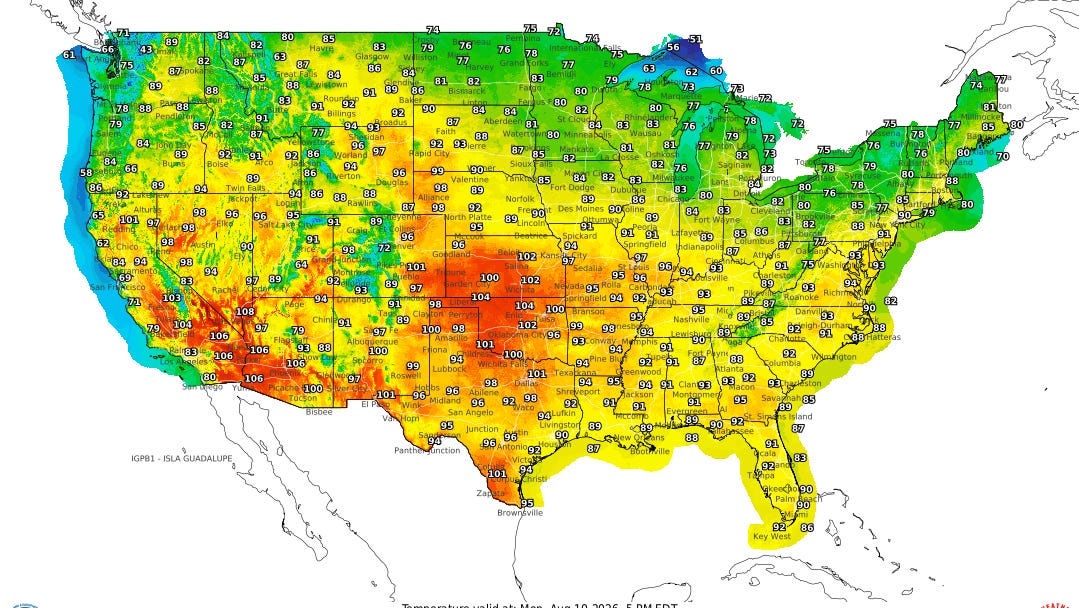
Hot conditions that sweltered western states, from California to Colorado, over the weekend, will persist through midweek, with 114-degree temperatures forecast in some areas. In northern states, like Washington and Oregon, the dry weather could further kindle destructive fires that have scorched thousands of acres.
“Dry conditions and locally gusty winds at times will result in a very high wildfire risk across the Northwest this week, supporting continued wildfire growth and the potential for new wildfires to ignite,” said AccuWeather Meteorologist Kai Kerkow.
Humid air in the Eastern and Central United States, meanwhile, could fuel severe thunderstorms, heavy rainfall, flash flooding and damaging winds. Across the Atlantic Ocean, forecasters say intense heat in western and central Europe could create ideal wildfire conditions just as firefighters appeared to subdue a raging fire in southern France and Spain.

Scorching heat early in the week
States from California to Colorado saw record-breaking temperatures in the upper 90s and triple digits Aug. 8 and Aug. 9. The heat is expected to persist through midweek and spread east into the central Rockies and Great Plains.
In parts of Kansas and Missouri, where the heat index is forecast to reach up to 107 degrees, an extreme heat warning remains in place through Wednesday, Aug. 12. Communities in Arizona, California and Nevada are similarly under heat warnings.
Much of the western United States faces an elevated fire risk through early this week due to high heat, dry vegetation and heavy winds. Areas at risk include Washington, Oregon, Idaho, Wyoming, and parts of Kansas, Oklahoma and Texas. Lightning storms across Colorado, Utah, Nevada and California could also ignite new fires, according to AccuWeather meteorologists.
Fires already burning in the northwest, near Spokane, Washington, have led to persistent poor air quality alerts and advisories in several states. The storms threaten to exacerbate those issues in the Northwest, Kerkow said.
Some of the debris will also migrate East this week, creating a “hazy look to the sky,” AccuWeather Lead Long-Range Expert Paul Pastelok said.

Extreme storms hit Central, Eastern US
Extreme thunderstorms could bring severe wind gusts, heavy rainfall and flash flooding to parts of the Great Plains, Midwest and East Coast through Tuesday, Aug. 11.
Storms moving from Northeastern Illinois to Central Pennsylvania and Northern Virginia could snarl morning and evening commutes Monday, Aug. 10, particularly in large metro areas like Chicago, Detroit, and Pittsburgh, the National Weather Service warned.
Areas in Southern Ohio, Eastern Kentucky, West Virginia, and southwestern Pennsylvania face the greatest risk of flash flooding, with the potential for up to 12 inches of rain, according to AccuWeather meteorologists.
Hail and heavy downpours are also possible in the Midwest and Dakotas Monday, Aug. 10 into Tuesday, Aug. 11.

European heat wave comes amid total eclipse
Americans traveling to Europe to see a total solar eclipse pass across the Arctic, Greenland, Iceland, northern Spain and parts of Portugal Aug. 12 will contend with extreme heat on the continent.
France, Spain, Italy and other countries in Western and Central Europe are gearing up for what’s expected to be their fifth heat wave of the year.
Temperatures in Spain are forecast to exceed 35 degrees Celsius, roughly 95 degrees Fahrenheit, through much of the week, according to AEMET, Spain’s state meteorological agency.
In Céret, a French community bordering Spain, temperatures soared to 40.3 degrees Celsius, or roughly 105 degrees Fahrenheit, Aug. 8. From Aug. 12 to Aug. 14, temperatures are expected to soar above 95 degrees Fahrenheit (35 degrees Celsius).
The intense heat has dried out vegetation and worsened drought conditions in parts of France, increasing the risk of wildfires, officials said.
Fires have burned through the Bordeaux region of France and parts of central Spain amid record heat and below-average rainfall.
Original source: https://www.usatoday.com/news/nation/
Author

seoexperts1994@gmail.com
Related Posts

Mayor moves to ban Cornell event permits after rape allegations
- 0
- 211 words
The mayor of Ithaca, the New York city home to Cornell University, called for a ban on student event and special event...
Read out all
Federal court halts execution of Christa Pike in 11th hour
- 0
- 211 words
A federal court has stayed the execution of Christa Pike less than two hours before it was set to be carried out....
Read out all
‘A tired refrain.’ Critics fight adding Trump’s name to Kennedy Center
- 0
- 220 words
WASHINGTON – President Donald Trump's opponents to putting his name on the Kennedy Center called his argument that the venue would fail...
Read out all
Israel-bound jet lands in Saudi Arabia after apparent pilot fight
- 0
- 214 words
A commercial passenger jet bound for Tel Aviv from Dubai made an emergency landing in Saudi Arabia after an apparent fight broke...
Read out all
Trump to send $500 ACA refund checks to nearly 1 million Americans
- 0
- 204 words
WASHINGTON — President Donald Trump is set on Sept. 30 to start sending $500 checks to nearly 1 million Americans his administration...
Read out all
In 2016, Gretchen Carlson’s lawyer warned: “They’ll kill you”
- 0
- 124 words
More VideosThe battle to stop deepfake abuse before it spreadsSee shark swim in severe New Jersey floodingWhy are so many ICE employees...
Read out all