British maritime security company Ambrey said on Thursday it has been engaged in the salvage of the stricken tanker Caroline Bezengi off the Omani coast and that salvage vessels are en route to support the operation.
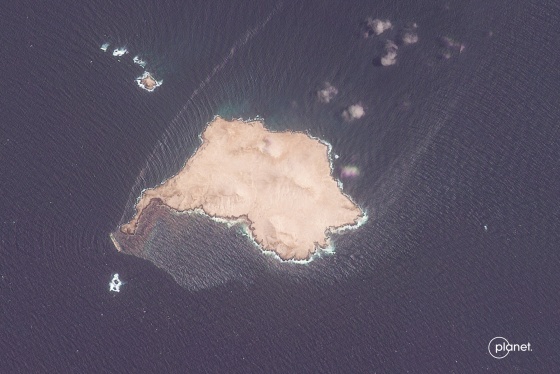
The Caroline Bezengi tanker, carrying an estimated 800,000 barrels of Russian oil and under international sanctions, ran aground on June 30 near an Omani marine nature reserve that is home to wildlife including Arabian Sea humpback whales and Socotra cormorants.
Ambrey said it was working with stakeholders in Oman and has contracted a leading international oil spill response firm.
“This is an extremely challenging situation, compounded by adverse weather conditions associated with the Khareef monsoon” Ed Wollaston, director of global response at Ambrey, said.
Oman‘s Dhofar region experiences the Khareef, an annual season triggered by Indian Ocean monsoon winds that fill the area with steady mist, cool drizzles and intermittent rain.
Oman‘s environment agency said on Wednesday that a vast oil spill from a leaking tanker had started to hit the country’s coastline, threatening to become one of the world’s worst in years after spreading largely unchecked for weeks.
The vessel first reported difficulties off Yemen on June 8 after what maritime sources said appeared to be a blast, and no party has claimed an attack as the tanker navigated two separate wars on its journey from Russia to India.
A web of complex war- and sanctions-related rules governing shipping and oil spills is already hampering efforts to respond and could yet get in the way of halting an impending disaster, insurers and analysts say.
The IOPC Funds, an intergovernmental agency dealing with tanker spills compensation, told Reuters it would not be involved in clean-up costs because the incident was being treated as an “act of war” rather than a simple accident.
The 25-year-old tanker is also not insured by any recognized Western insurance provider.
“A nightmare scenario is there’s no adequate response to keep the worst from happening,” said oil spills specialist John Amos, CEO of SkyTruth, a nonprofit organization aiming to strengthen environmental conservation through the use of satellite images.
Amos said that in this case, the vessel would “continue to break up under the steady onslaught of wind and waves and to lose the entire cargo and that could be a spill upwards of 40 to 50 million gallons.”
Amos said this would rival the 1989 Exxon Valdez oil spill in sheer size.
The ship is similar in size and capacity to the Sanchi, an Iranian ship that collided with a freighter off China in 2018 in the world’s worst oil tanker disaster in decades.
The U.N.’s International Maritime Organization said that seasonal monsoon conditions had limited access to the tanker and delayed salvage operations.
“Oil spill contingency planning is in place,” an IMO spokesperson told Reuters.
Oman said on Monday the slick covered almost 400 square km. It has not elaborated on the containment efforts, but said it had used booms to try to stem the spread.
Environmental agencies and oil spill specialists estimated its size as far larger, noting the spread has accelerated dramatically since the beginning of August.
“The affected area went from around 45 square km by the end of July, to 150 at the beginning of August. And then within two days, it quadrupled to 600 by the 4th or 5th of August,” said Hanen Keskes, political campaigns lead for Greenpeace in the Middle East.
SkyTruth’s Amos said that measures required, beyond the use of booms, included stabilising the tanker and transferring whatever crude oil was left onboard to another vessel.
“The longer we wait, the more damaged and decrepit that tanker gets, the more complicated and difficult and potentially dangerous that salvage operation is going to be,” he said.