- 0
- 935 words
In an era dominated by the transfer portal and annual roster reconstruction, homegrown talent still matters in college football — if a program is fortunate enough to find and sign it.
Building from within state borders is no longer a realistic blueprint for everyone, especially when proven starters can be acquired overnight and recruiting footprints stretch nationwide. But for programs planted in talent-rich areas with abundant resources, protecting the backyard remains one of the clearest paths to sustained success.
The teams with the most in-state players on their rosters have turned familiarity into an advantage, stacking local prospects who understand the program, the rivalry stakes and what winning means in that region. Some benefit from geography. Others have simply recruited their own states better than everyone else.
That distinction matters in a sport where roster retention is increasingly difficult. Homegrown players are not guaranteed to stay, but landing them initially establishes trust, strengthens relationships with high school programs and gives coaches a foundation that cannot always be purchased elsewhere through the portal.
And when portal signings come into play, some of those talent conversations have already taken shape through familiarity.
Thanks to a preseason data study by Rotowire across all 138 FBS programs, 2026 rosters are 32.2% homegrown on average. For this exercise, “homegrown” refers to players whose identified hometowns are in the same state as their school. This includes transfer acquisitions.
College football’s FBS leaders in homegrown talent
| Rank, team | Conference | Percentage |
|---|---|---|
|
Mountain West |
76.7% |
|
|
2. UTSA |
American |
75% |
|
3. TCU |
Big 12 |
72.6% |
|
4. FIU |
Conference USA |
70.8% |
|
MAC |
68.7% |
|
|
6. Fresno State |
Pac-12 |
68.1% |
|
7. Texas State |
Pac-12 |
67.3% |
|
Pac-12 |
66% |
|
|
9. UTEP |
Mountain West |
65.5% |
|
10. Texas Tech |
Big 12 |
64.8% |
|
11. Baylor |
Big 12 |
63.9% |
|
12. Houston |
Big 12 |
62.9% |
|
13. Louisiana |
Sun Belt |
61% |
|
14. North Texas |
American |
60.4% |
|
15. Georgia |
SEC |
59.7% |
Even with mass portal additions in the last two recruiting cycles, Texas Tech remains local-loaded at 64.8%. In fact, there are five other Texas programs — UTSA, TCU, Baylor, Houston and North Texas — also ranked in the top 15 nationally for local signings.
TCU leads all Power Four rosters at a 72.6%, which speaks to the program’s DFW Metroplex roots. Sonny Dykes and the Horned Frogs signed 21 freshmen and 12 transfers in the 2026 recruiting cycle, with every first-year player being from Texas and a couple of the portal acquisitions.
Southern states Alabama and Louisiana often lead in per-capita concentration of FBS-level players, but the size of states like Texas and California produces more athletes annually and fills rosters for numerous programs nationwide.
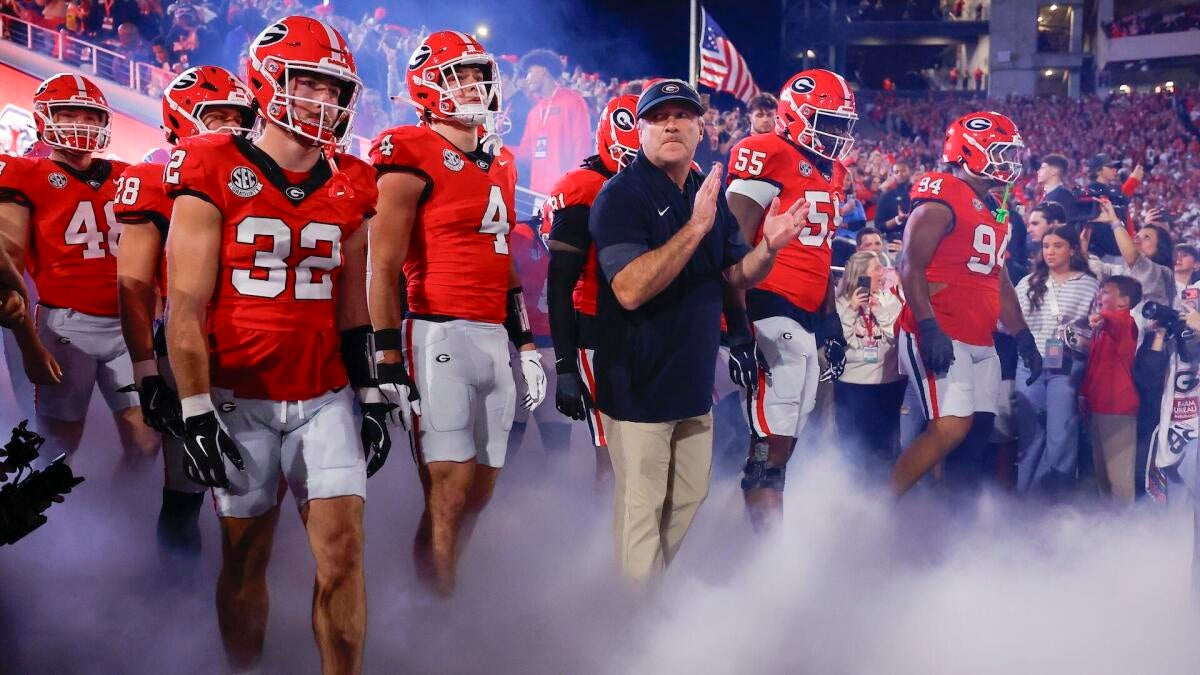
Georgia, as the SEC’s top homegrown program, speaks to the fertile recruiting zones within the Peach State, from which Kirby Smart often plucks talent. The Bulldogs took only eight transfers this cycle and have stuck to their preference for high school recruiting over the heavy portal emphasis now at most programs.
“We think that our investment in our player is better than your investment in your player that I would get from you in the portal,” Smart said last month. “We just keep thinking that if we pour into our guys, that our development is going to be better than taking a guy that’s second-, third-, fourth-year that somebody else developed.”
Georgia’s 2026 roster is made up primarily of players that the Bulldogs recruited out of high school. Of the 129 players on the roster, 110 of them — 85.3% of the roster — came to Georgia directly from high school, many of whom came from in-state powerhouse programs.
Other SEC teams just outside the top-15 nationally in homegrown rosters were all from talent-rich states, including Texas (17th, 56.4%), Florida (21st, 54.1%), and Texas A&M (25th, 51.2%).
Oregon and Notre Dame are the two most notable title contenders who rarely go in-state talent, given the lack of availability every cycle. Dan Lanning and the Ducks come in at No. 119 nationally for homegrown players at just 13.6%, while the Fighting Irish and their national brand fill only 10.6% of their roster from the state of Indiana.
Homegrown talent by FBS conference
| Conference | Percentage |
|---|---|
|
Pac-12 |
36.3% |
|
Big 12 |
35.7% |
|
American |
35.3% |
|
MAC |
35% |
|
SEC |
34.8% |
|
Sun Belt |
31.4% |
|
ACC |
30.6% |
|
Conference USA |
30.4% |
|
Big Ten |
30.3% |
|
Mountain West |
24.6% |
Conference brand doesn’t necessarily correlate to a local roster, but geographical significance plays a role. The newly formed Pac-12 — which includes Boise State and Fresno State — leads nationally in localized recruiting, with 36.3% of all rosters consisting of homegrown talent.
Part of the reason the Mountain West is at the bottom of the homegrown rankings is that Air Force, Hawaii and Wyoming bring down its average. Hawaii is 138th nationally in homegrown talent at less than 1%, while Air Force comes in tied at No. 131 at 8.5% of its roster and Wyoming at No. 129 (9.8%).
Another service academy, Army, ranks second-lowest with an average at 1%, given its recruiting extremes.
The Big Ten sits at the bottom of college football in homegrown roster talent, averaging 30.3% per school, but the explanation is not poor recruiting. The league’s footprint stretches from coast to coast, and several programs operate in states that do not produce enough Power Four prospects to fill elite-level rosters.
That forces coaches to recruit nationally, raid traditional pipelines and lean heavily on the transfer portal. Even blue-blood brands like Ohio State, Michigan and Penn State routinely build beyond their borders because their reach allows it. The conference’s recent expansion creates a misleading comparison, combining wildly different recruiting regions under one umbrella.
In short, the Big Ten has fewer programs capable of living exclusively off their backyards each year. And coming off the league’s third consecutive national championship with Indiana’s title, the recruiting plan is working.
Original source: https://www.cbssports.com/
Author

seoexperts1994@gmail.com
Related Posts
Devon Witherspoon contract: Seahawks star becomes NFL’s highest-paid CB, raises bar for Christian Gonzalez
- 0
- 894 words
There's a new highest-paid cornerback in the NFL, as Devon Witherspoon and the Seattle Seahawks have agreed to a four-year, $132 million...
Read out all
Titans’ Nazeeh Johnson says fertility medication led to six-game NFL suspension for PED violation
- 0
- 441 words
New Tennessee Titans cornerback Nazeeh Johnson was suspended by the NFL for the first six regular-season games without pay for violating the...
Read out all
Islam Makhachev closing in on G.O.A.T. conversation with plenty still to accomplish ahead of UFC 330
- 0
- 1,788 word
The first rule to remember when attempting to have a legacy conversation with Islam Makhachev is that it's far too early for...
Read out all
2026 St. Jude Championship leaderboard: Live updates, FedEx Cup Playoffs highlights from Round 3 in Memphis
- 0
- 191 words
Pinned Aug 15, 2026 at 10:44 am ET Link copied Tom Kim making an early move with four straight birdies While those...
Read out all
Ian Garry dripping confidence that he will earn welterweight title at UFC 330: ‘I’ve seen it in my dreams’
- 0
- 1,988 word
PHILADELPHIA -- For all of the technical skill that Ian Machado Garry, the UFC's No. 1-ranked welterweight, brings into Saturday's UFC 330...
Read out all
What’s next for J.J. McCarthy after lost QB battle? NFL teams skeptical he can improve and mature
- 0
- 1,093 word
Throughout last summer, there was enough concern around the Minnesota Vikings organization about J.J. McCarthy being the team's starting quarterback that some...
Read out all