
- 0
- 681 words
Lake Powell hits record low as drought threatens power
 Trevor Hughes
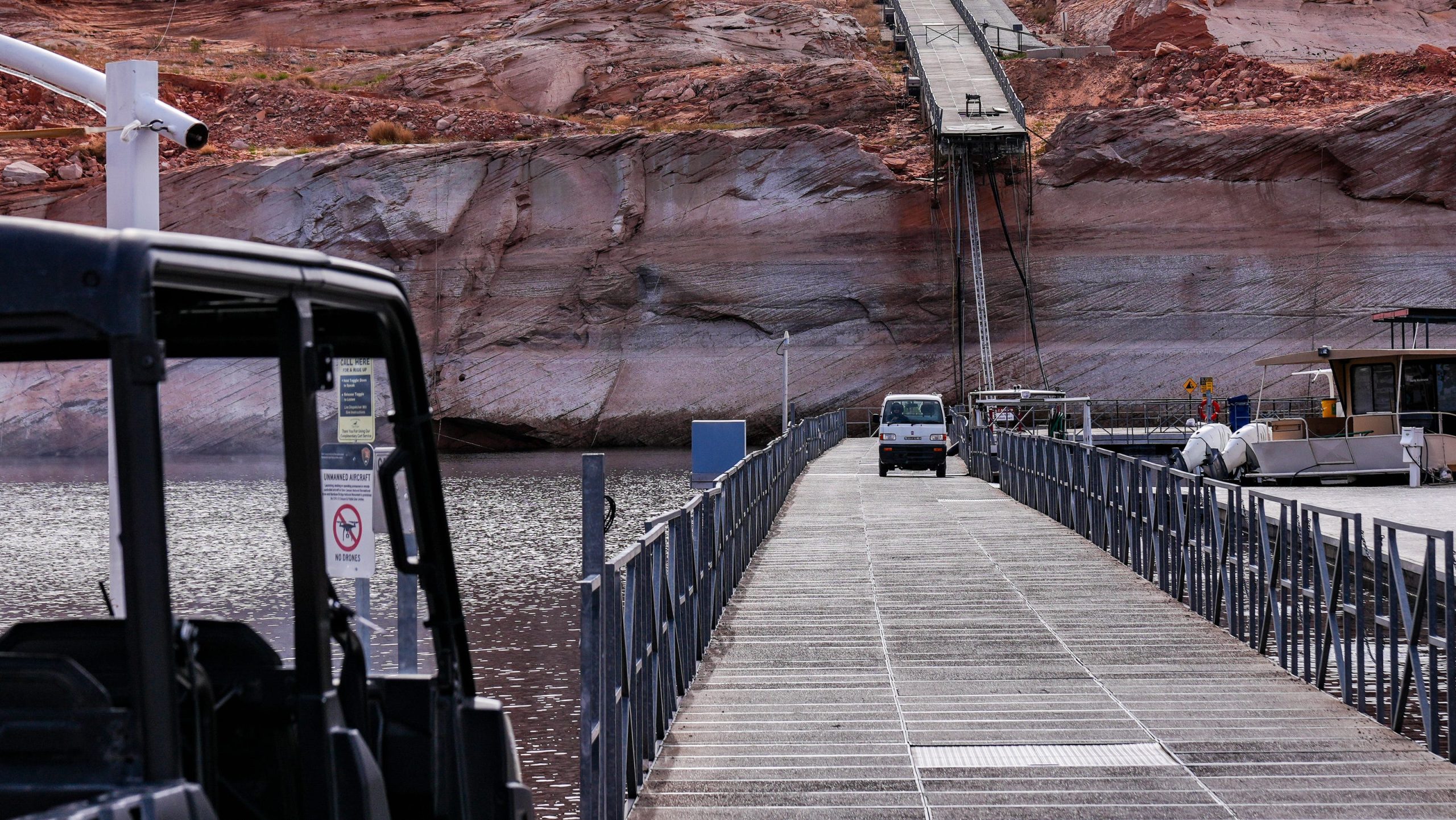
Lake Powell, the giant reservoir on the Utah-Arizona border that helps power millions of homes, has fallen to its lowest level ever amidst a worsening western drought exacerbated by climate change.
The lake’s surface dropped to 3,519.91 above sea level on Aug. 15, according to the Bureau of Reclamation’s automated gauge system. The previous lowest level was 3,519.92 feet, reached in April 2023. Dropping below 3,490 feet could imperil the lake’s ability to generate electricity, and federal officials have been pulling water out of smaller reservoirs upstream to help delay reaching that level.
Nevertheless, the lake may fall close to that level, known as minimum power pool, early next spring, according to federal predictions. Further drops could take the lake to what’s known as “dead pool,” where it’s too low to flow downstream. That could spark draconian cuts to how much water is available for millions of people to drink, and imperil farms 500 miles away in California’s Imperial Valley.
The lake’s level is recorded daily by automated gauges, and the Bureau of Reclamation cautions that readings could be later revised. However, the lake has been on a downward trajectory for months, and was widely expected to reach this mark around mid-August.

Ongoing drought has complicated management of both Lake Powell and Lake Mead, outside Las Vegas. Lake Mead on Aug. 7 fell to its lowest-ever level and is now setting a new record-low daily as it continues to fall. The Lake Powell area draws an estimated 4 million recreation visitors annually to houseboat, water ski and kayak on the lake and its scenic side canyons, along with the Rainbow Bridge rock arch.
“Now we’re at the point where we’ve seen it coming for 20 years and so now it’s going to be both really hard and really urgent,” Aaron Weiss, executive director of the Center for Western Priorities, told USA TODAY in June. “Whatever the solutions are, they’re going to have to happen rapidly.”
In addition to limiting lawn irrigation and paying farmers to use less water, some proposals to protect Powell and Mead call for piping water from the Mississippi River into Arizona, hauling icebergs from the polar regions or building nuclear-powered desalination plants off the California coast.
Several environmental groups have also proposed removing or entirely bypassing the Glen Canyon Dam, draining what’s left into Lake Mead, and implementing stricter water conservation measures.
The two reservoirs provide hydroelectricity, drinking and irrigation water to millions of Americans across the west by storing up the Colorado River. The only time they have previously been this low was when they were first being filled.

The river serves seven Western states, Native American tribes and two northern Mexican states with water for agriculture, irrigation and drinking, hydroelectricity, recreation, and fish and wildlife habitat. The Glen Canyon Dam created Lake Powell, while the Hoover Dam created Lake Mead.
The Powell-Mead reservoir system was designed to store water during extra-wet years and release it during dry ones. But long-term trends mean less water is falling on the Colorado Rockies as snow. Complicating matters, rapid growth of the West ‒ possible in large part because of the reservoirs ‒ has placed extra demand on the system.
A new federal plan released last month calls for significantly reducing the amount of water flowing out of Lake Mead, which would make it harder for farmers in California and Arizona to irrigate their crops, and might require additional water-saving measures in many cities.
Neither lake will gain significant new water until next spring, and only then if the winter is a wet one. The 2025-2026 winter was unusually dry and warm, and climatologists say they expect Colorado River flows will continue declining in the decades to come. A wet fall caused by a super El Niño weather pattern in the Pacific Ocean could help, but water experts say it won’t reverse the long-term trends.
Original source: https://www.usatoday.com/news/nation/
Author

seoexperts1994@gmail.com
Related Posts
Mayor moves to ban Cornell event permits after rape allegations
- 0
- 211 words
The mayor of Ithaca, the New York city home to Cornell University, called for a ban on student event and special event...
Read out all
Federal court halts execution of Christa Pike in 11th hour
- 0
- 211 words
A federal court has stayed the execution of Christa Pike less than two hours before it was set to be carried out....
Read out all
‘A tired refrain.’ Critics fight adding Trump’s name to Kennedy Center
- 0
- 220 words
WASHINGTON – President Donald Trump's opponents to putting his name on the Kennedy Center called his argument that the venue would fail...
Read out all
Israel-bound jet lands in Saudi Arabia after apparent pilot fight
- 0
- 214 words
A commercial passenger jet bound for Tel Aviv from Dubai made an emergency landing in Saudi Arabia after an apparent fight broke...
Read out all
Trump to send $500 ACA refund checks to nearly 1 million Americans
- 0
- 204 words
WASHINGTON — President Donald Trump is set on Sept. 30 to start sending $500 checks to nearly 1 million Americans his administration...
Read out all
In 2016, Gretchen Carlson’s lawyer warned: “They’ll kill you”
- 0
- 124 words
More VideosThe battle to stop deepfake abuse before it spreadsSee shark swim in severe New Jersey floodingWhy are so many ICE employees...
Read out all