- 0
- 778 words
DEI policies brought no financial penalty for companies that kept them, study finds
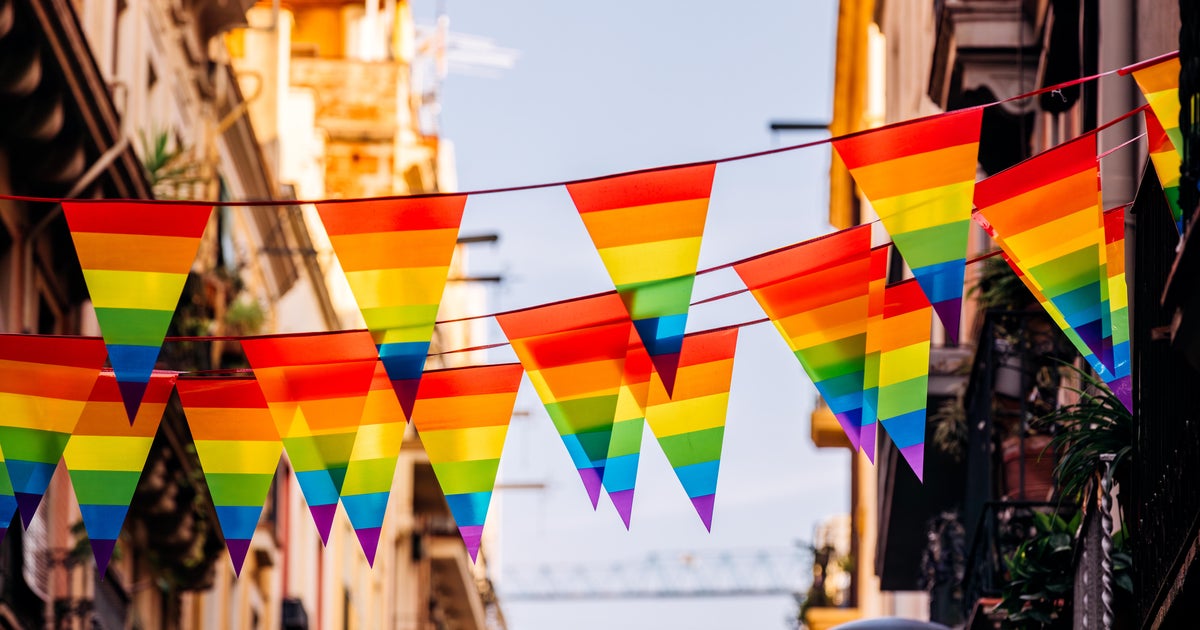
Companies that stuck with their diversity, equity, and inclusion policies during the second Trump administration, which has sought to cut such programs from the federal government and encouraged private-sector firms to follow suit, have incurred no financial penalties, according to a new study.
Corporations in the S&P 500 that maintained their DEI programs performed just as well in terms of stock market returns and revenue as firms that wound down their diversity efforts, Jacob Grumbach, an associate professor at the Goldman School of Public Policy at the University of California, Berkeley and the co-author of the new paper, “Markets Do Not Punish Firms for Maintaining DEI,” told CBS News.
The study focused on the companies’ financial performance before and after President Trump signed Executive Order 14173, “Ending Illegal Discrimination and Restoring Merit-Based Opportunity,” in January 2025.
Some of the biggest U.S. retail corporations and tech companies, including Apple, Costco, Delta Air Lines and Dollar Tree, made no changes to their DEI programs and policies despite the Trump administration’s push. At the same time, some other large businesses — including Target and Walmart — rolled back their DEI efforts. The researchers compared the two groups by measuring their shares’ “abnormal performance,” which is the difference between their expected returns and their actual share performance.
The companies that stuck with their DEI efforts had no difference in abnormal returns from those that eliminated their programs, the analysis found. The researchers also studied the effects on revenue to gauge whether consumers supported or expressed a backlash against corporations over their DEI efforts, finding no detectable differences.
The findings suggest that “U.S. firms have a lot of leeway” to resist pressure to cut such programs, Grumbach said.
Corporate risks
Despite the findings, Grumbach said there are also economic arguments for companies that stepped back from diversity efforts. For instance, some corporate executives could rightly fear that the Trump administration could retaliate against firms that stuck with DEI, he added.
“A publicly traded firm that’s out of step with an executive order might get less favorable treatment from the executive branch. Or if it’s planning a merger or acquisition, it might not be approved by the Federal Trade Commission, or it could be subject to hostile tax auditing,” he said.
He added, “The fear was legitimate. At this time, there was a lot of uncertainty about how the executive order would be enforced,” referring to Executive Order 14173.
In another scenario, “the executive order could causally lead the public to reduce its support for DEI.”
Consumer reaction to DEI
The research shows that many American consumers continued to patronize businesses that maintained practices aimed at uplifting marginalized groups, Grumbach said, pointing to strong revenue performance among such firms.
Even so, there are exceptions, with some firms experiencing a consumer backlash tied to their DEI efforts. The most notable case may be that of Bud Light, which partnered with transgender social media personality Dylan Mulvaney in 2023. Shares of its parent company, AB InBev, temporarily plunged, while sales of Bud Light plunged in the weeks following the ad campaign.
In 2025, Target experienced a backlash from progressive shoppers, with activists calling for a nationwide consumer boycott of its stores after the retailer ended its DEI initiatives.
Despite the controversies, Americans broadly remain supportive of the benefits of diversity, with about six in 10 saying they believe businesses with a diverse workforce are both more profitable and innovative, according to a 2025 poll from Gallup and Bentley University.
“There is a business case for diversity, that firms that have DEI should perform better,” Grumbach said. “And there is also a theory that firms would be taking on massive legal and other forms of risk by being out of step with an executive order.”
The findings suggest that consumers may be supportive of companies that maintain their DEI efforts. Still, it could also indicate that shoppers aren’t swayed much by corporate diversity policies, Grumbach said.
“Many things are going on, one of which is that DEI programs don’t always have that much depth to them. Some are symbolic, so this partially reflects that they don’t affect companies as much either way,” Grumbach said.
Original source: https://www.cbsnews.com/entertainment/
Author

seoexperts1994@gmail.com
Related Posts
Judge allows Jane Doe to remain anonymous in Cornell University sexual assault lawsuit
- 0
- 209 words
October 23, 2026 / 6:46 PM EDT / CBS News A judge ruled Friday that Jane Doe, who filed a civil lawsuit...
Read out all
New UFO files include details of strange triangular craft: “Absolute acoustic silence”
- 0
- 209 words
October 23, 2026 / 5:02 PM EDT / CBS News Washington — Federal agents in the western U.S. this year encountered a...
Read out all
Trump lifts 50% tariffs on some Canadian goods in boon to Maine Sen. Susan Collins
- 0
- 206 words
Updated on: October 23, 2026 / 5:55 PM EDT / CBS News President Trump on Friday slashed tariffs on a handful of...
Read out all
Top intel Democrats say they’ve “war-gamed” how to react if Trump alleges foreign interference in midterms
- 0
- 209 words
October 23, 2026 / 5:26 PM EDT / CBS News The top Democrats on the House and Senate intelligence committees say they...
Read out all
ICE crackdown prompts some Texas Latinos to turn away from Trump
- 0
- 210 words
October 23, 2026 / 5:00 PM EDT / CBS News McAllen, Texas — Benny Melendez, the owner of a small construction company...
Read out all
U.S. designates helium a critical material following 60 Minutes report on supply chain crisis
- 0
- 209 words
October 23, 2026 / 3:59 PM EDT / CBS News The Energy Department designated helium as a critical material Friday, days after...
Read out all