- 0
- 768 words
$75,000 CD vs. $75,000 high-yield savings account: Which will earn more interest over the next year?
Getty Images/iStockphoto 
Something that seemed highly unlikely at the start of 2026 could very well happen this September.
The Federal Reserve, which issued three interest rate cuts in the final four months of 2025 after following the same pattern in 2024, could now raise rates when it meets again in September. According to the CME Group’s FedWatch tool, there’s around a 50% chance the central bank bumps up its benchmark interest rate by 25 basis points when it meets again, its first such increase in multiple years. While that won’t be a positive development for borrowers, it can be for savers accustomed to earning elevated returns on their money in recent years.
Two such accounts that have offered viable ways to earn more interest include high-yield savings and certificate of deposit (CD) accounts. If you haven’t yet taken advantage by depositing any money into either, you still have an opportunity to do so, especially now that the interest rate climate is poised to heat up again. And, if you get started with a large, five-figure amount such as $75,000, you’ll be rewarded with a substantial return. Between a CD and a high-yield savings account, however, which will earn more interest over the next year with a deposit of this size? Below, we’ll crunch the numbers that savers should know before making any transfers.
See how much interest you could be earning with a high-yield savings account here.
$75,000 CD vs. $75,000 high-yield savings account: Which will earn more interest over the next year?
Calculating the interest-earning potential of a CD account, whether it has a term of just three months or one year or longer, is simple to do with precision thanks to the account’s fixed rate that will remain the same until the maturity date arrives. Calculating the interest-earning potential associated with a high-yield savings account, however, can be harder to do as the account has a variable rate responsive to market conditions. But with today’s high rates holding steady now, and with the low likelihood of a drop happening anytime soon, savers can still gain a reliable approximation of how much they stand to earn over the next year.
Here’s which will earn more, calculated against the top rates available for each and the assumption that the high-yield savings account rate will hold through August 2027:
- $75,000 1-year CD at 4.40%: $3,300.00
- $75,000 high-yield savings account at 4.10% after one year: $3,075.00
- More profitable account: The 1-year CD will earn $225 more.
While, technically, the 1-year CD will earn more interest than the high-yield savings account over the following year, it’s not guaranteed. The high-yield savings account, in theory, could see its interest rate rise alongside Fed rate hikes or other economic movement and that could soon mean greater interest-earning potential compared to the CD rate which will hold for 12 months. Carefully consider both options, then, before getting started and don’t discount the advantages of splitting the $75,000 into both accounts right now instead.
Review the top savings account options available to you here.
The bottom line
A 1-year CD, whether it has a deposit of $75,000, less or more, is positioned to earn more interest than a high-yield savings account with the same deposit amount right now. But with the interest rate environment subject to change in the months ahead and only the high-yield savings account poised to respond in real time, savers will need to be cognizant of the limits of each account type. For some, the CD could still be worth it while others may find the high-yield account more beneficial while still others could benefit from keeping the money split between both. Whatever you do, be sure to move this money out of a traditional savings account. With an average rate there of just 0.38%, you’re essentially losing money by not moving over into one of these high-rate alternative accounts instead.
Original source: https://www.cbsnews.com/moneywatch/
Author

seoexperts1994@gmail.com
Related Posts
Security video helps lead Oregon detectives to a masked killer who tried to hide the crime
- 0
- 6,094 words
48 Hours Security video helps lead Oregon detectives to a masked killer who tried to hide the crime By Natalie Morales "48...
Read out allFired Ukrainian defense minister says Ukraine is in a “technological war” with Russia
- 0
- 458 words
Exclusive CBS Evening News Fired Ukrainian defense minister says Ukraine is in a "technological war" with Russia By Aidan Stretch Reporter Aidan...
Read out all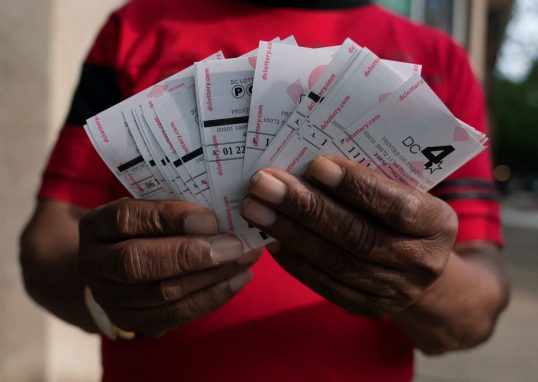
Powerball back to $20M tonight after $1B winner
- 0
- 446 words
LOTTERYPowerball (game)Powerball back to $20M tonight after $1B winner Fernando Cervantes Jr.USA TODAYAug. 15, 2026, 9:00 p.m. ETAfter a single ticket matched...
Read out all
Sallie Mae review: Is it the right private student loan for you?
- 0
- 1,634 word
PERSONAL FINANCELoansSallie Mae review: Is it the right private student loan for you?Sharon Wu, CFEISpecial to USA TODAYAug. 15, 2026, 10:04 a.m....
Read out all
These are the best student loans for grad students
- 0
- 2,129 words
PERSONAL FINANCELoansThese are the best student loans for grad students Faith WakefieldUSA TODAYAug. 15, 2026, 1:33 p.m. ETThe federal Graduate PLUS loan...
Read out allYou want to join a clinical trial. What to know about the hurdles
- 0
- 1,652 word
HEALTH AND WELLNESSClinical trialsYou want to join a clinical trial. What to know about the hurdlesMichelle AndrewsKFF Health NewsAug. 15, 2026, 7:00...
Read out all