
- 0
- 377 words
Costa Rica’s recently discovered “coffee frogs” sing in plantations, but pesticides threaten them
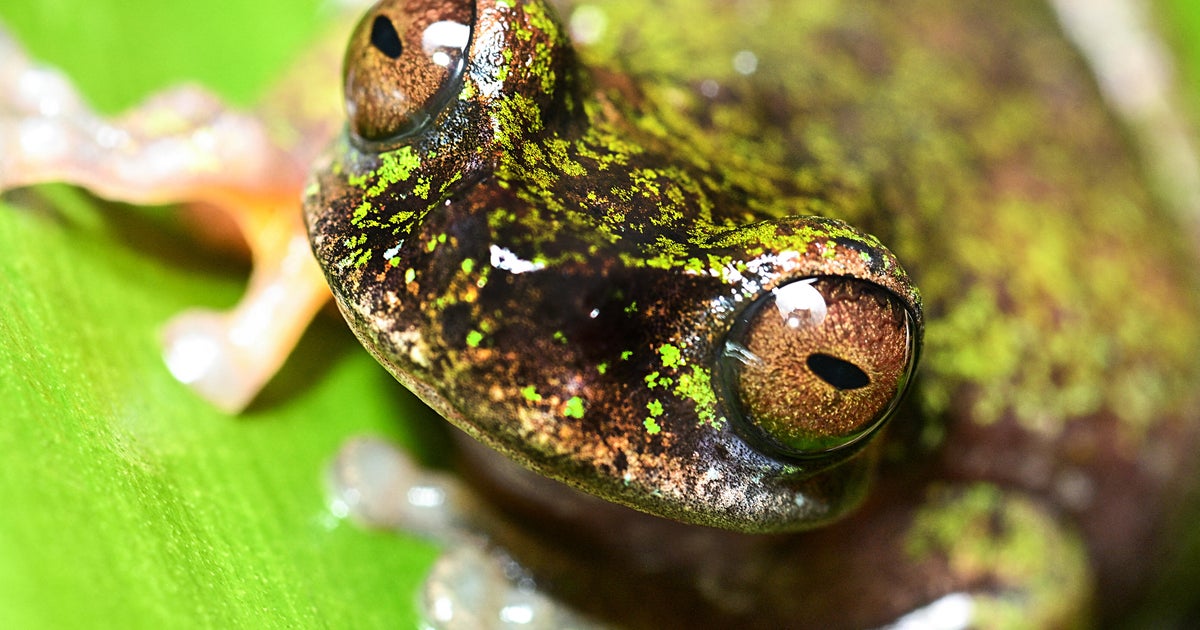
A tiny greenish, nocturnal frog that thrives in coffee plantations was discovered in Costa Rica’s central Pacific region, where it also faces risks from agrochemicals used in farming.
Measuring less than 4 centimeters and known as the “spring frog,” AFP reporters observed the dark green-spotted amphibians in San Lorenzo de Tarrazu.
“It’s a new species of tree frog for science and endemic to Costa Rica,” researcher Wagner Chaves-Acuna told AFP, per the findings of colleagues from the University of Costa Rica and Argentina’s National Council for Scientific and Technical Research.
Ezequiel BECERRA /AFP via Getty Images 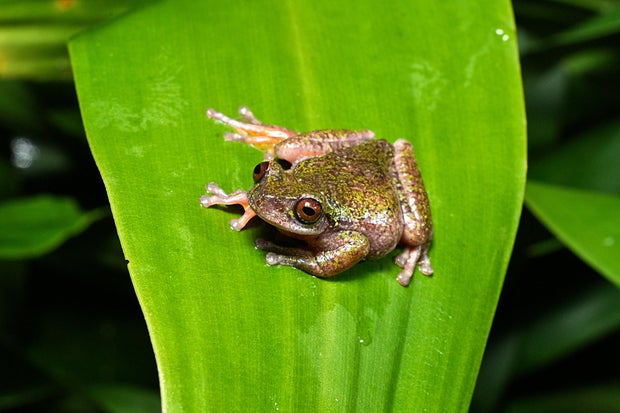
The tiny frog was first observed in the 1960s, but it was incorrectly identified as another species, according to Costa Rica’s National Alliance for the Conservation of Amphibians and Reptiles (ANCAR). It was rediscovered and confirmed in 2021 through genetic and morphological studies, the organization said.
Also nicknamed the “coffee frog,” the species has another distinctive trait: males have a translucent throat that inflates with their short, high-pitched call.
“At night, when they are most active, you can hear them singing and perched on coffee shrubs,” Chaves-Acuna said.
Generally, frogs seek out shade, moisture and food in the crops — but they are not after the coffee berries, feeding instead on the small insects in the habitat.
Ezequiel BECERRA /AFP via Getty Images 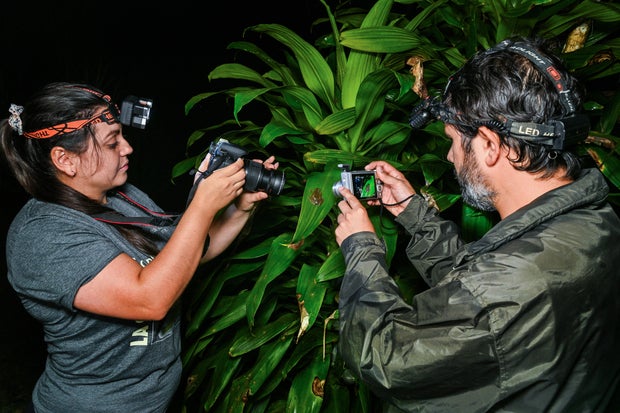
Chaves-Acuna warns that pesticide use on coffee plantations could potentially pose a risk to these tiny amphibians.
“These poisons travel through the air … they seep through the soil and that’s where they enter the aquatic systems where the tadpoles develop,” Chaves-Acuna said.
The species also faces other threats, including waste dumping, increased tourism and the loss of vegetation due to the invasion of protected areas, according to ANCAR.
Original source: https://www.cbsnews.com/world/
Author

seoexperts1994@gmail.com
Related Posts
These airlines are issuing waivers amid nor’easter
- 0
- 215 words
A nor’easter that brought wind and high surf to the mid-Atlantic is expected to pummel New England, and airlines are offering flexibility...
Read out all
Supreme Court allows Trump’s voter verification database
- 0
- 214 words
WASHINGTON – The Supreme Court on Sept. 25 handed the Trump administration a win in its effort to increase federal involvement in...
Read out all
Doomsday Clock expert worried about ‘an extremely pressing threat’
- 0
- 214 words
When an employee of a major artificial intelligence company recently estimated there is a 10% chance the technology could wipe out humanity...
Read out all
Putin’s party secures a record number of seats in Russia’s wartime election
- 0
- 211 words
Russian authorities on Friday released the full results from the country’s first wartime parliamentary election, which further cemented the Kremlin’s overwhelming political...
Read out all
Pope Leo XIV arrives in France with a message of peace and human dignity
- 0
- 213 words
Pope Leo XIV began a four-day visit to France on Friday, hoping to draw attention to his appeals for peace at a...
Read out all
US relations strained after push for Greenland, EU foreign policy chief says
- 0
- 210 words
NEW YORK — President Donald Trump's provocations against America's allies, from his push to take over Greenland to a tariff threat against...
Read out all