
- 0
- 377 words
Costa Rica’s recently discovered “coffee frogs” sing in plantations, but pesticides threaten them
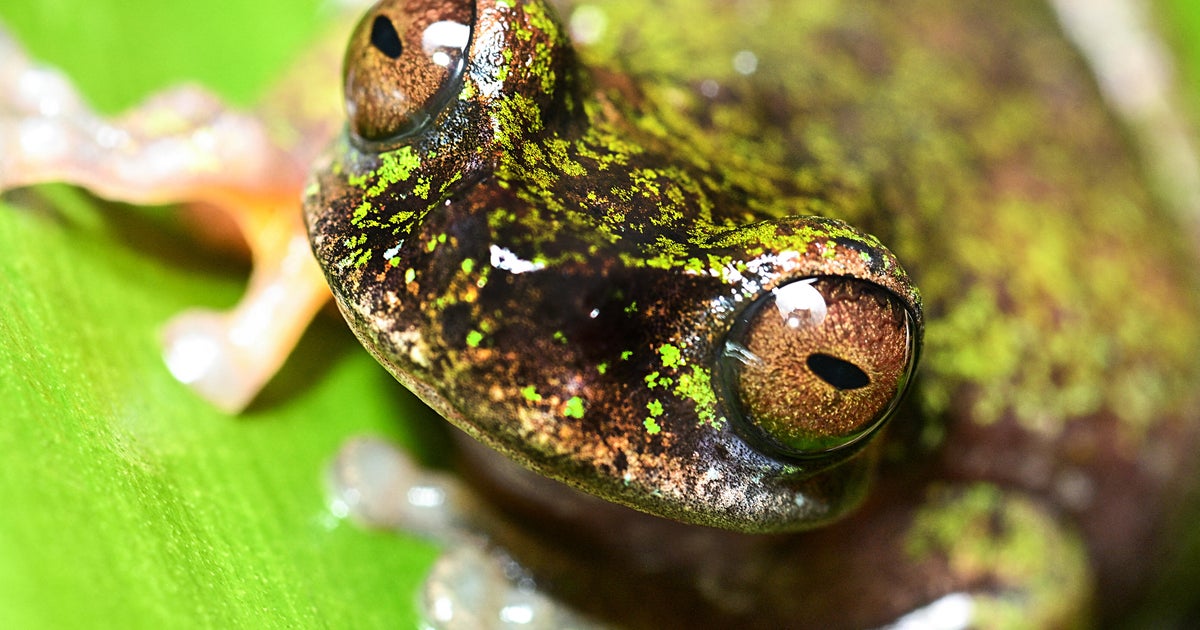
A tiny greenish, nocturnal frog that thrives in coffee plantations was discovered in Costa Rica’s central Pacific region, where it also faces risks from agrochemicals used in farming.
Measuring less than 4 centimeters and known as the “spring frog,” AFP reporters observed the dark green-spotted amphibians in San Lorenzo de Tarrazu.
“It’s a new species of tree frog for science and endemic to Costa Rica,” researcher Wagner Chaves-Acuna told AFP, per the findings of colleagues from the University of Costa Rica and Argentina’s National Council for Scientific and Technical Research.
Ezequiel BECERRA /AFP via Getty Images 
The tiny frog was first observed in the 1960s, but it was incorrectly identified as another species, according to Costa Rica’s National Alliance for the Conservation of Amphibians and Reptiles (ANCAR). It was rediscovered and confirmed in 2021 through genetic and morphological studies, the organization said.
Also nicknamed the “coffee frog,” the species has another distinctive trait: males have a translucent throat that inflates with their short, high-pitched call.
“At night, when they are most active, you can hear them singing and perched on coffee shrubs,” Chaves-Acuna said.
Generally, frogs seek out shade, moisture and food in the crops — but they are not after the coffee berries, feeding instead on the small insects in the habitat.
Ezequiel BECERRA /AFP via Getty Images 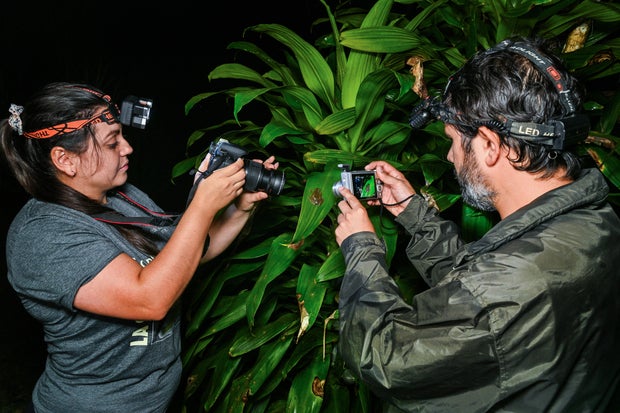
Chaves-Acuna warns that pesticide use on coffee plantations could potentially pose a risk to these tiny amphibians.
“These poisons travel through the air … they seep through the soil and that’s where they enter the aquatic systems where the tadpoles develop,” Chaves-Acuna said.
The species also faces other threats, including waste dumping, increased tourism and the loss of vegetation due to the invasion of protected areas, according to ANCAR.
Original source: https://www.cbsnews.com/world/
Author

seoexperts1994@gmail.com
Related Posts

Small businesses roll the dice on Kalshi to manage their risks
- 0
- 206 words
September 24, 2026 / 10:46 AM EDT / CBS News Brenden Theaters typically sees a surge in sales during the summer, before...
Read out all
Will an FDA crackdown curb access to cheaper GLP-1 weight-loss drugs? Here’s what to know.
- 0
- 206 words
September 24, 2026 / 11:53 AM EDT / CBS News The Food and Drug Administration has warned a major compounding pharmacy that...
Read out all
Why the bond market is freaking out, and what it means for your money
- 0
- 205 words
September 24, 2026 / 3:08 PM EDT / CBS News The bond market is flashing red. The yield on the 30-year Treasury...
Read out all
Mortgage rates are back above 7%. How much higher could they climb?
- 0
- 202 words
Updated on: September 24, 2026 / 3:46 PM EDT / CBS News House hunters are facing a fresh affordability crunch as mortgage...
Read out all
Sen. Duckworth slams Trump’s “foolhardy plan” to make triumphal arch a military complex
- 0
- 208 words
September 25, 2026 / 7:00 AM EDT / CBS News Democratic Sen. Tammy Duckworth of Illinois is demanding the Pentagon and Federal...
Read out all
New bill would lower Social Security retirement age for some workers
- 0
- 201 words
Updated on: September 25, 2026 / 9:33 AM EDT / CBS News Among the various proposals for bolstering Social Security is raising...
Read out all