
- 0
- 1,569 word
Touring at 87, Judy Collins is as open-eyed as ever about love, loss and legacy
The folk legend opens up about Stephen Stills, mourning her husband and why her “Sweet Judy Blue Eyes” farewell tour may not be her final bow.
 Krystie Lee Yandoli
- Folk legend Judy Collins is on a farewell tour, but she implies it may not be her final goodbye to performing.
- Collins reflects on her past romance with Stephen Stills, who wrote the song “Suite: Judy Blue Eyes” about her.
- She is navigating the grief of losing her husband of 46 years, Louis Nelson, by staying busy with her tour.
- At 87, Collins remains focused on the future, working on a new book and continuing to perform.
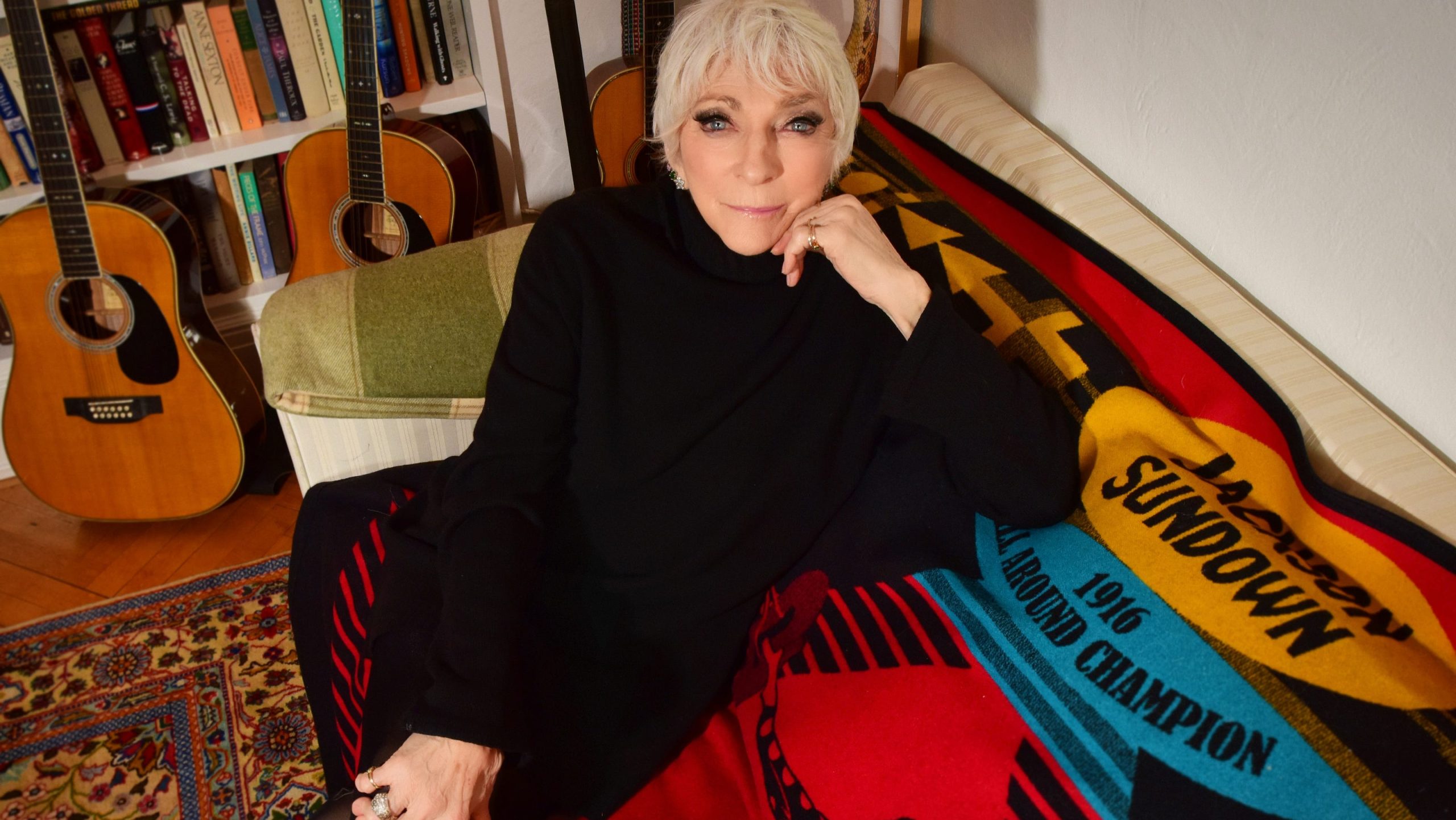
LOS ANGELES – As the last of the sunlight slipped behind the hills on a Friday in August, folk music legend Judy Collins sat backstage at The Ford preparing to perform at the storied venue for the first time. Beyond her dressing room walls, dusk was settling over the intimate amphitheater, where an audience of about 1,200 people gathered to hear the songs that have followed Collins and millions of listeners through nearly seven decades.
Despite being billed as one stop on the Sweet Judy Blue Eyes Farewell Tour, which began earlier in the summer and is set to continue through winter 2027, Collins cheekily implies this may or may not be her final goodbye to performing.

“I can do a farewell tour, like many people do. It means different things to different people,” the 87-year-old artist tells USA TODAY, alluding to the musicians who continue on the road after their own farewell tours. “I’m loving every minute of it. We’ve had a chance to do things in a slightly different way, and I’m just having a ball.”
Dressed in fuchsia from head to toe and covered in a shawl to keep warm, Collins settles onto a black leather couch and glances at a television screen as opening act Bruce Cockburn takes the stage. The shimmering strap attached to her custom 12-string Martin guitar catches the dressing room light, as do her signature blue eyes.
Although Collins has never performed at The Ford, Los Angeles is familiar territory. She lived in the city as a young girl while her father worked in Hollywood radio and then returned in the late 1960s, making Laurel Canyon her home amid the musicians – Cass Elliot and Joni Mitchell among them – who transformed the neighborhood into the center of a cultural revolution. Sitting backstage just miles from her former enclave, the surrounding hills hold the brief yet formative memories of one slice of her life.
“I’ve been here in and out, always because of my work,” she explains. “I love California. I have a lot of friends here and I always feel interested in being here. I wish I could always stay longer, but I never can because I have to go home.”

When Collins looks back on her time in Laurel Canyon, one memory eclipses the others: her brief but passionate romance with Stephen Stills of Crosby, Stills & Nash.
“I think about my wonderful relationship with Stephen Stills,” she says. “He and I had a very hot, hot love affair going on, but it was short because I was not going to stick around. I was going to go home.”
Home was New York, where Collins has lived for more than 60 years. “I was never going to move [to California],” she says. “I was committed to New York.”

Though their romance ended, its musical legacy lives on through Stills’ “Suite: Judy Blue Eyes,” a popular folk-rock classic that has spanned generations and even lends its name to Collins’ farewell tour. Stills first played the song for Collins when she returned to Los Angeles for her birthday on May 1, 1969.
“He came and got me with flowers, and he brought a beautiful old Martin guitar and sang me, ‘Suite: Judy Blue Eyes,’” Collins remembers. “I said, ‘It’s beautiful, but it’s not gonna get me back.’”
Collins is known as the inspiration behind Stills’ hit single, but her place in musical history has never depended on just being someone else’s muse. Her own expansive discography stretches across nearly seven decades, beginning with the songs that established her as one of folk music’s defining voices. Collins opened Friday night’s show with “Both Sides Now,” the Joni Mitchell composition she recorded for her 1967 album, “Wildflowers.” Released as a single the following year, the song became a major hit and earned Collins the Grammy for best folk performance and helped define her career.
“I don’t think I can get away with not singing it,” Collins says. When asked what relevance “Both Sides Now” has at this point in her career, she pauses and says, “It has such a lovely cycle to it.”
With such an extensive catalog, it isn’t a simple feat to assemble a new setlist night after night. Before each show, Collins and her Juilliard-trained pianist, Will Kjeer, peruse her songbooks, balancing spontaneity with the classics audiences expect to perform.

“I have such an incredible song list,” Collins says. “Will and I get the books out, and we go through the songs and figure out what’s for tonight. I like to make it different every night. I have to make sure that it’s balanced and that it has some of the things that people want to hear.”
Friday night’s set included Joan Baez’s “Diamonds & Rust” as well as traditional folk songs “Barbara Allen” and “John Riley.” Pausing along the way to share stories about her father, early influence of singer Jo Stafford, and her friendship with Leonard Cohen, Collins also performed her original songs “Spellbound” and “The Blizzard,” recited two poems in honor of her late husband Louis Nelson as well as Tennessee Williams, and closed the evening with a rendition of “Amazing Grace,” joined by Cockburn.
The poems articulated Collins’ grief over the passing of her industrial designer husband, who died from cancer in December 2024. After spending 46 years together, Collins says his absence has become an inescapable presence on the tour. But keeping busy and drawing support from the crowd have helped Collins navigate a loss she knows she will never fully overcome, despite knowing, “we’re all on this planet and there’s only one way off.”
“We had 46 years together, which I think is remarkable for an old hippie like me. I know that if I weren’t working, I wouldn’t get over this,” she says. “Everybody has their tragedies and hard times. Sometimes I say to my audiences, ‘Tonight, you’re my grief group.’”

Nelson had been intertwined with Collins’ personal and professional lives since they met in 1978, just four days before she began her sobriety journey.
Collins processes her grief by writing letters to her late husband, as well as to herself from his perspective. Wearing two of his wedding bands amidst her collection of eclectic rings (one of which he lost, replaced, then found again), Collins explains she still speaks to him. She believes his spirit is with her, and she imagines that he now lives among the trees.
“I’ll never get over Louis,” she says. “But I like recovery. I think recovering is a big deal. It always has different forms, and it has a way of letting you know what you’re capable of that you didn’t know. I’m sure that’s true about recovery from grief as well.”
The evening’s set was reflective of more than just Collins’ catalog; it also traced decades of hard work and the persistence required to build an artistic career. If she could offer her younger self one piece of advice, Collins says she would be honest about how difficult that life can be, and how fiercely an artist must protect the conviction that started it.
“It’s hard, and you’re going to have to figure out a way to work for a living,” she says. “Get on the train with something that’s starting up that you have an edge on, and hold on to it for dear life. Because that train is going to try to throw you off and it’s going to try to wear you out. But if you have that edge, if you have that energy source at the core of yourself and you believe in it, then go for it.”
Whatever the pursuit – “singing, painting, or building bridges” – Collins says the principle is the same. “Take hold of that kernel of interest, talent, and conviction and just grab it.”
Even at 87, Collins remains focused on what lies ahead rather than dwelling on the perception of her legacy and what she’s already accomplished. Among the projects still ahead is a new book about her life she says she’s working on and hoping to title, “Singing Through the Storm.”
“I have a little sign on my mirror at home in my bedroom. It says, ‘Do it now,’ and that helps me,” she says. “If I get my teeth into something that I want to do, I do it. I love touring. I love singing. I love performing. I love this thing that I do, whatever the shape of it is.”
Original source: https://www.usatoday.com/entertainment/
Author

seoexperts1994@gmail.com
Related Posts

Jon Batiste cancels concerts, citing ‘personal circumstances’
- 0
- 470 words
MUSICJon BatisteJon Batiste cancels concerts, citing 'personal circumstances' KiMi RobinsonUSA TODAYUpdated Aug. 12, 2026, 6:52 p.m. ETJon Batiste is taking an unexpected...
Read out all
Jenna Bush Hager says being the president’s daughter earned her ‘Today’ job
- 0
- 421 words
CELEBRITIESJenna HagerJenna Bush Hager says being the president's daughter earned her 'Today' job KiMi RobinsonUSA TODAYAug. 12, 2026, 8:31 p.m. ETJenna Bush...
Read out all
NFL preseason week 1 is here, how to watch the games with Sling
- 0
- 1,068 word
STREAMINGStreaming ServicesNFL preseason week 1 is here, how to watch the games with Sling David HoffmanUSA TODAYAug. 13, 2026, 1:59 p.m. ETWeek...
Read out all
Norah O’Donnell shares private details about her menopause journey
- 0
- 450 words
TVNorah O'DonnellNorah O’Donnell shares private details about her menopause journey Sameen ChaudhryUSA TODAYUpdated Aug. 13, 2026, 11:56 a.m. ETNorah O'Donnell is getting...
Read out all
Kelly Ripa reveals surprising ‘bad habit’ that led to gum surgery
- 0
- 475 words
CELEBRITIESKelly RipaKelly Ripa reveals surprising 'bad habit' that led to gum surgeryThe "Live with Kelly and Mark" host took a hiatus from...
Read out all
Michael Jackson child sex abuse case won’t move forward in court
- 0
- 578 words
CELEBRITIESCelebritiesMichael Jackson child sex abuse case won't move forward in courtLiza EsquibiasUSA TODAYUpdated Aug. 13, 2026, 3:17 p.m. ETThe Cascio family's lawsuit...
Read out all