
- 0
- 413 words
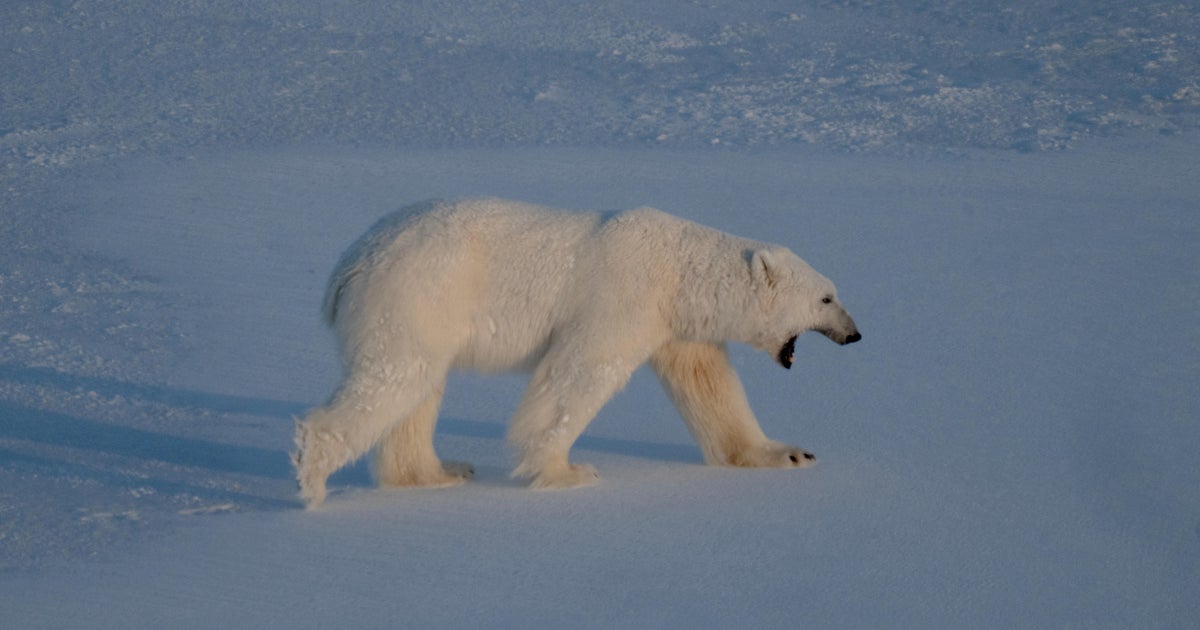
A boat operator used a foghorn to wake a sleeping polar bear. They were fined over $5,000.
A person in Norway’s Svalbard archipelago in the Arctic has been fined $5,255 for using a foghorn to wake a sleeping polar bear, local officials said Thursday.
The incident took place earlier this month when a vessel was sailing in a fjord in northeastern Svalbard, around 620 miles from the North Pole.
“Its occupants are said to have spotted a polar bear sleeping on land,” the governor of the territory said in a statement.
“A person on board then used the ship’s foghorn, waking the animal, which moved to another location,” he added.
The governor’s office ordered the individual to pay the hefty fine, which the person agreed to do. Neither the identity nor nationality of the person has been disclosed.
Under local regulations, “it is forbidden to needlessly disturb, attract or pursue a polar bear,” which was declared a protected species in Svalbard in 1972.
Olivier MORIN /AFP via Getty Images 
Some 260 polar bears were counted in the archipelago during the last scientific estimate, carried out in 2015.
Polar bear population thriving
Climate change and melting ice have threatened polar bears’ habitat in recent years, but scientists reported in January that the bears in Svalbard are thriving, and even packing on the pounds.
Jon Aars, a senior scientist with the Norwegian Polar Institute, led a team of researchers who meticulously tracked the weight and size of nearly 800 bears in Svalbard between 1992 and 2019. They found the polar giants to be in good shape, able to survive and to continue raising new cubs.
“I was quite surprised,” Aars told CBS News, “because we have lost so much sea ice since I started.”
For years scientists have raised the alarm that shrinking sea ice cover could put polar bears at risk, as they use the ice as a platform from which to hunt for seals.
“Some of us would predict that they should be in trouble already,” Aars said.
But what his team has found suggests the bears are adapting to smaller ice patches, and it may even be helping them hunt more efficiently as their prey is concentrated in smaller areas.
Original source: https://www.cbsnews.com/healthwatch/
Author

seoexperts1994@gmail.com
Related Posts
Timeline: The disappearance of George Smith
- 0
- 980 words
48 Hours Timeline: The disappearance of George Smith September 11, 2025 / 9:42 AM EDT / CBS News Add CBS News on...
Read out allInvestigating the death of designer Sylvie Cachay
- 0
- 737 words
48 Hours Investigating the death of designer Sylvie Cachay August 1, 2026 / 9:05 PM EDT / CBS News Add CBS News...
Read out allPhotos show celebrations at Obama Presidential Center opening ceremony in Chicago
- 0
- 1,522 word
Pictures Photos show celebrations at Obama Presidential Center opening ceremony in Chicago By CBS Chicago Team June 18, 2026 / 12:22 PM...
Read out allNotable Deaths in 2026
- 0
- 22,772 words
Sunday Morning Notable Deaths in 2026 By David Morgan Updated on: July 30, 2026 / 4:42 PM EDT / CBS News Add...
Read out all
Summer music highlights of 2026
- 0
- 5,223 words
Sunday Morning Summer music highlights of 2026 By David Morgan Updated on: August 10, 2026 / 10:43 AM EDT / CBS News...
Read out allFrance’s social media ban for children under 15 struck down by top constitutional authority
- 0
- 453 words
World France's social media ban for children under 15 struck down by top constitutional authority August 14, 2026 / 12:15 PM EDT...
Read out all