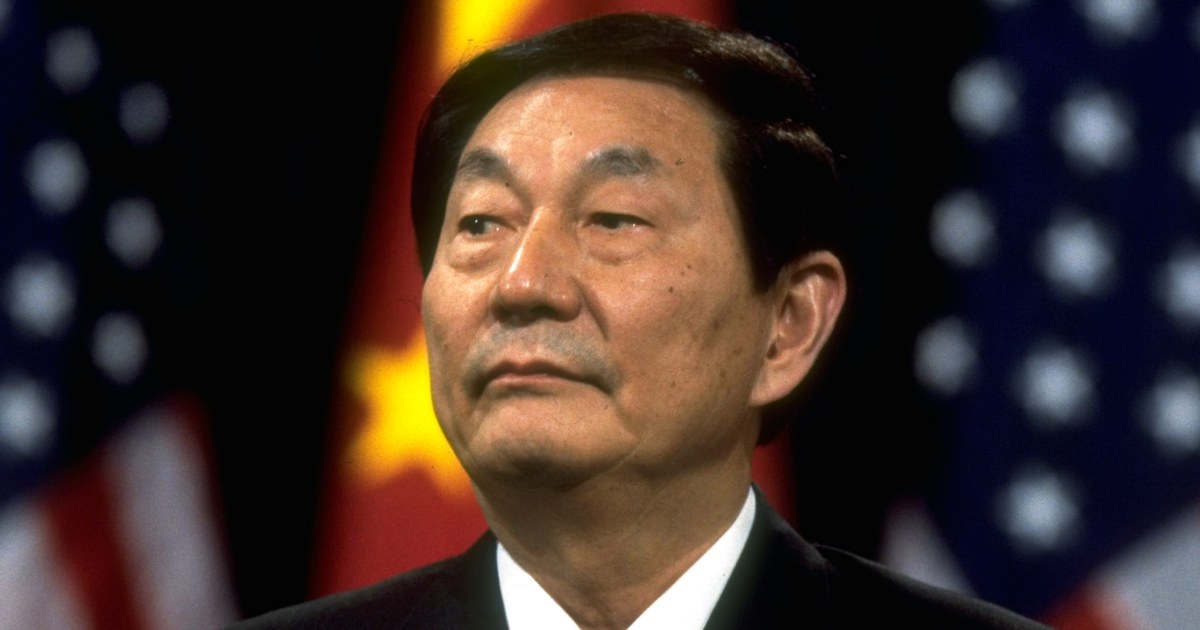
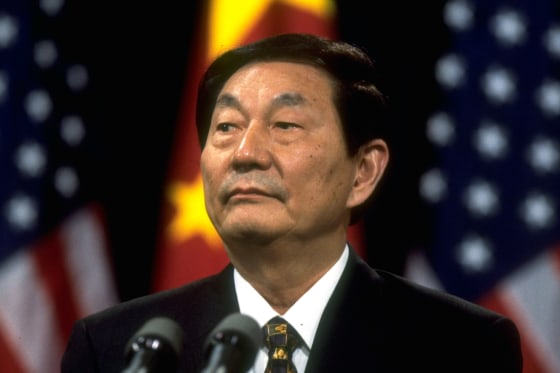
Former Chinese Premier Zhu Rongji has died, according to state media. The impatient, sharp-tongued reformer helped ignite China’s explosive economic boom by forcing wrenching change on state industry in the 1990s and leading the country into the World Trade Organization.
The official Xinhua news agency reported that Zhu died of illness in Beijing at around 11 a.m. on Wednesday. He was 97 years old.
Once sent into rural exile to do manual labor for praising reforms in other communist countries, Zhu pushed through a dizzying array of changes as premier, China’s top economic post, from 1998 to 2003.
Zhu clashed with Communist Party conservatives and state industry bosses as he pushed state-owned companies to become efficient and profitable. That cost millions of layoffs, but helped propel China to overtake Japan as the second-largest economy behind the United States in 2010.
Building on former leader Deng Xiaoping’s 1979 reforms, Zhu is credited with supplying the resourcefulness and tenacity to push through history-making changes such as China’s WTO membership, which helped to transform China into the world’s biggest exporter.
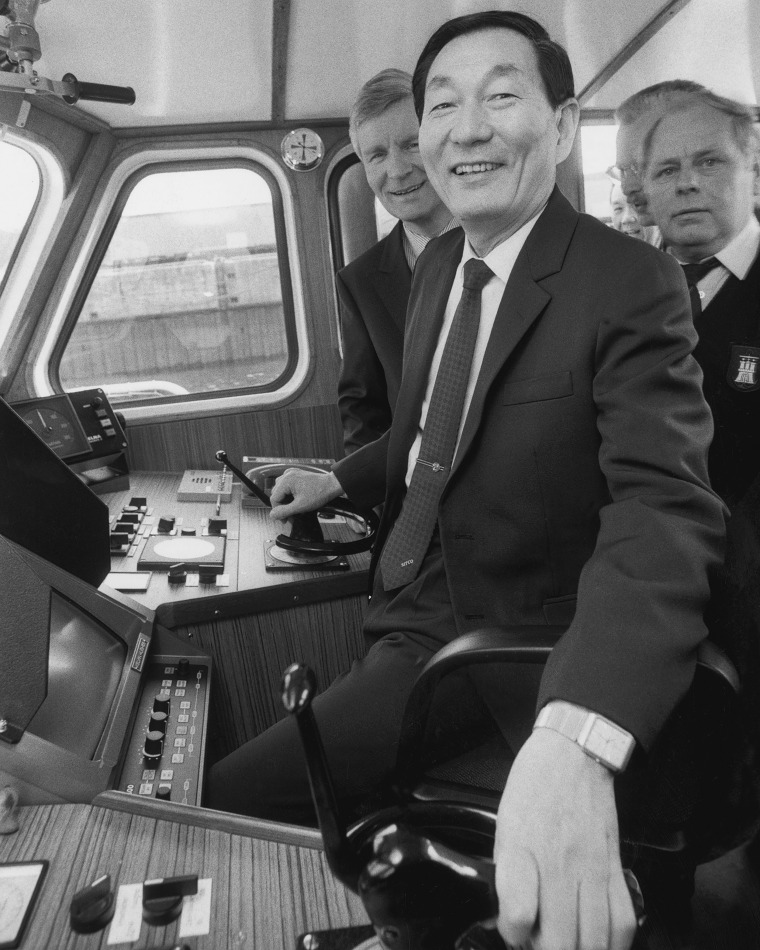
Those changes helped to keep economic growth above 8% a year from 2000-2010, peaking at 14.2% in 2007.
Named premier in 1998 at age 69, Zhu became a popular figure by criticizing official bungling and graft and accepting blame when the government fell short. His demanding style earned him the nicknames Boss and Zhu Fengzi, or Madman Zhu.
“I have prepared 100 coffins here — 99 for corrupt officials and one for myself,” Zhu said in 1998, according to the party newspaper People’s Daily.
Zhu ranked No. 3 in the party hierarchy behind President Jiang Zemin and Li Peng, chairman of the ceremonial legislature, the National People’s Congress. But he was a technician without his own power base. Zhu complained that allowed officials to ignore his orders.
Zhu made his name as a deputy premier in the 1990s by crushing inflation. He enforced price controls and cut off loans to money-losing state companies, rebuffing resistance by local leaders — a pattern Zhu would repeat as he fought conservatives over the pace of reform.
Zhu led efforts to secure WTO membership following marathon negotiations that began in the 1980s. That status would enshrine free trade as a national commitment, giving Zhu a tool to force local officials to stop protecting favored companies.
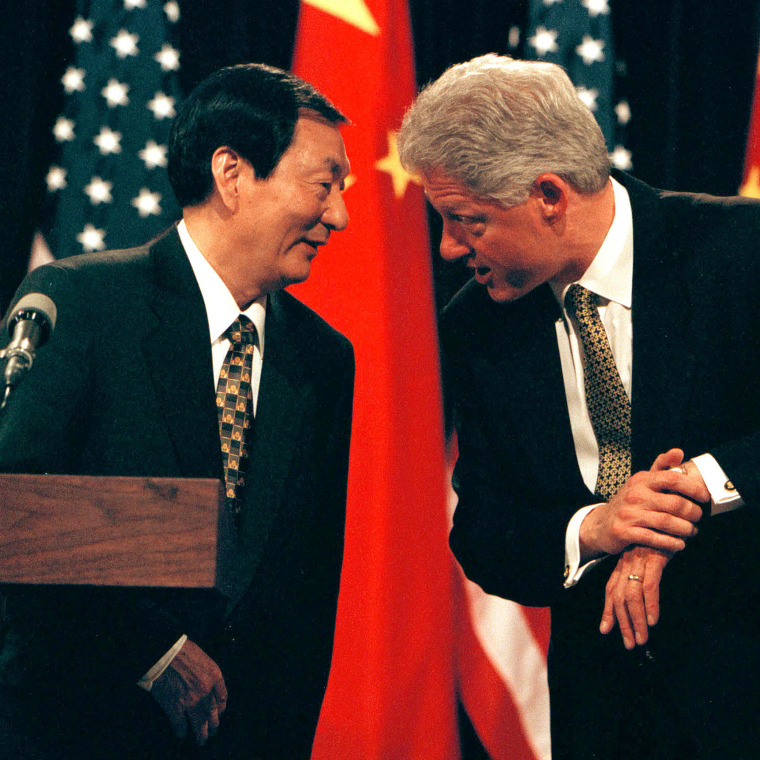
Zhu’s campaign was nearly derailed when he went to Washington in 1999 with market-opening concessions to win U.S. endorsement of the WTO bid. The Clinton administration rejected the offer as inadequate while his political enemies at home accused him of offering too much, but Zhu survived and China went on to join the body in December 2001.
Zhu launched China’s home ownership boom in 1998 with an initiative to sell apartments owned by state companies. Families rushed to buy, and within a decade the majority of urban housing was privately owned.
Still, Zhu was less an advocate of free enterprise than a skilled bureaucrat who carried out party orders to whip state industry into shape.
Zhu showed no interest in privatizing the economy. He played a key role in drafting plans in the 1990s to turn banks, airlines, oil companies and other enterprises into profit-oriented corporations but to retain government ownership.
Born Oct. 23, 1928, in Mao Zedong’s home province of Hunan, Zhu paid an early price for his willingness to take risks and speak out.
After a start as an economic planner, his career went into a 22-year eclipse when he was labelled a “rightist” in 1957 for praising reforms in Hungary and Yugoslavia. He was banished to the countryside during the 1966-76 Cultural Revolution to do manual labor.
Rehabilitated in 1979, Zhu rose swiftly, becoming deputy Shanghai party secretary in 1987 and mayor the next year.
As mayor in 1989, Zhu gained a reputation for moderation when he placated protesters and pledged not to call in the military.
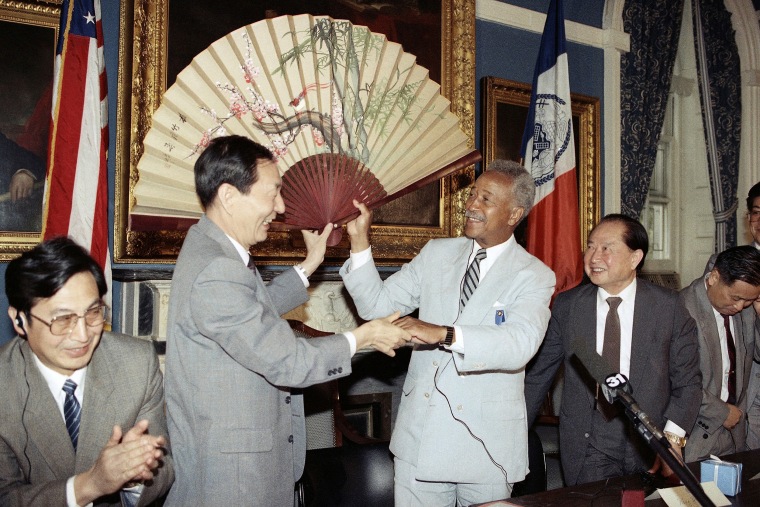
“He managed to defuse, with considerable subtlety, a tense political situation that could have developed into localized violence or worse if the military had felt it necessary to intervene,” wrote Australian diplomat Shelley Warner in the 1991 book “The Pro-Democracy Protests in China: Reports from the Provinces.”
Zhu’s boss, Jiang, would soon be called to Beijing by Deng and made party leader. Zhu was named deputy premier in 1991 and joined the party’s ruling Standing Committee in 1993.
Zhu broke with the leadership’s stance of infallibility by admitting and taking blame for official failings.
In 1998, after summer floods killed 4,150 people and officials were accused of embezzling money meant for anti-flood dikes, Zhu complained some barriers were no stronger than bean curd.
Three years later, he apologized on national television for his Cabinet’s failure to protect the public after an explosion in a schoolhouse in southern China killed at least 42 people, most of them children.
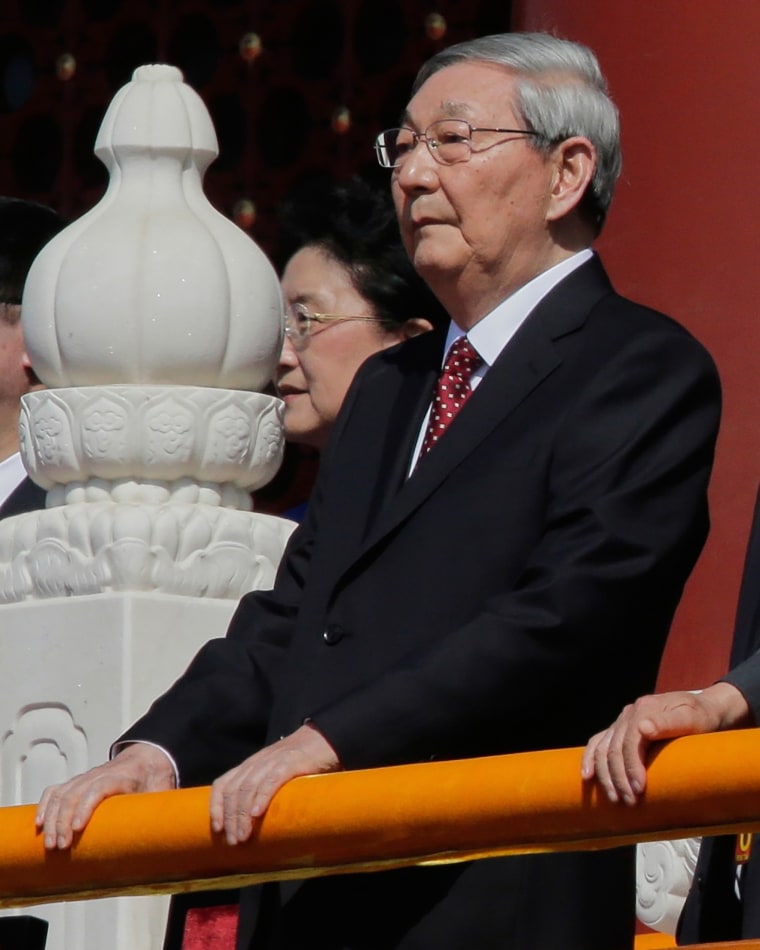
Zhu enlivened the party’s bland image by cracking jokes in public, sometimes at his own expense. Laughter erupted at a 1999 news conference when he said a recent photo “made me look like a dead man.”
One of Zhu’s proudest triumphs as deputy premier was to craft a tax system that required local officials to hand more revenue to Beijing. He said in 1996 that he deserved a Nobel Prize in economics for that.
Zhu rarely appeared in public after leaving office as premier.