
- 0
- 618 words
Fast-moving wildfire in western Canada forces more than 20,000 people to evacuate
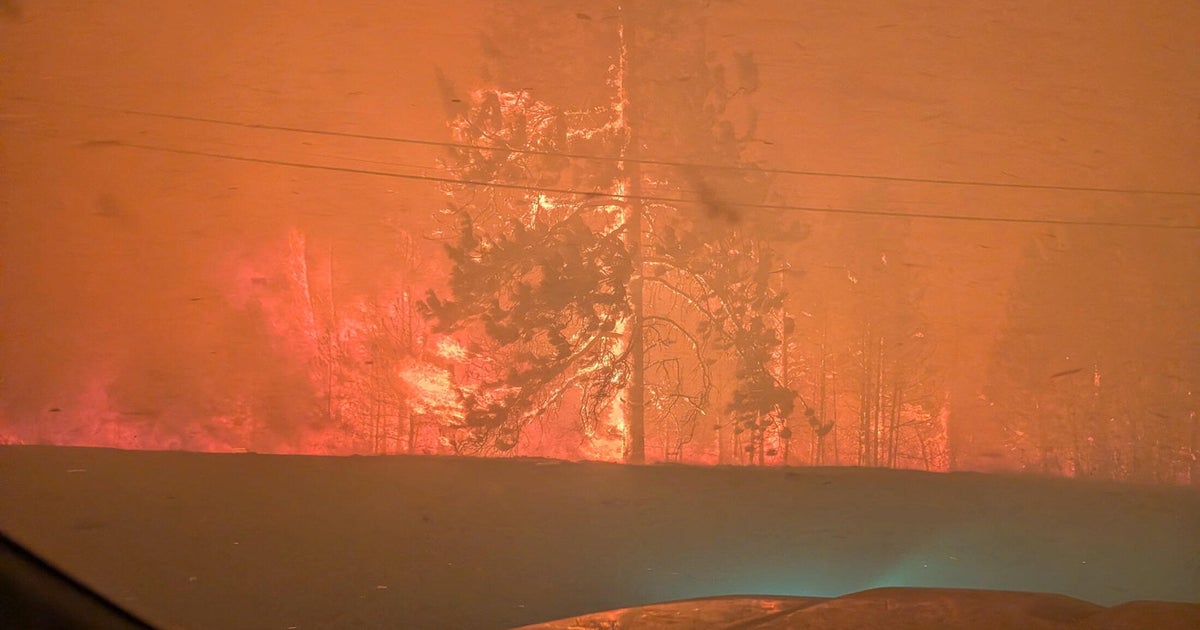
British Columbia declared a state of emergency Saturday after a fast-moving wildfire destroyed homes and forced more than 20,000 people to flee communities along Okanagan Lake in western Canada, with dozens rescued by aircraft.
Premier David Eby announced the emergency as more than 100 wildfires burned across the province, nearly half of them out of control in hot, windy weather and prolonged drought. Thousands fled on jammed roads as officials warned that “explosive” conditions could threaten more communities.
Summerland, home to about 12,000 people, was ordered evacuated overnight, along with about 8,000 people in and around nearby Peachland. Eby’s office confirmed “significant structure loss” but said officials could not yet assess the damage because the area remained an active fire zone.
BC Wildfire Service/Handout via REUTERS 
At an evacuation center in Penticton, Summerland resident Anette Boulet said the approaching fire “looked like doomsday.” She fled before dawn with her family and five dogs, unsure whether her home was still standing.
The speed of the fire forced even emergency officials to flee. Erick Thompson, an emergency official with the Regional District of Okanagan-Similkameen, said he had to abandon the emergency operations center and evacuate his family.
“I had to leave the EOC to come and get my family to leave this area. We’re heading south,” he said in a video posted early Saturday from his vehicle as traffic backed up around him.
The Royal Canadian Mounted Police said they are investigating a possible wildfire death near Summerland, but hazardous conditions have prevented authorities from confirming the fatality.
Some residents were trapped as the fire advanced, Eby said, while search-and-rescue crews continued looking for others who may have been caught. British Columbia Forests Minister Ravi Parmar said 18 firefighting aircraft rescued more than 50 people.
“People have lost their homes. And many people have been displaced,” Eby said.
BC Wildfire Service/Handout via REUTERS 
The Bald Range wildfire, first reported Friday evening, grew to more than 39 square miles as it raced roughly 9 miles toward Okanagan Lake within hours.
A British Columbia Wildfire Service perimeter map showed the fire had burned through areas containing numerous homes north of Summerland and reached Okanagan Lake. Videos posted on social media appeared to show homes burning as residents fled along roads with flames on both sides.
Eby called the sudden growth “a remarkable escalation in fire activity” and said the blaze became so intense that it generated its own weather system and lightning.
Cliff Chapman, the British Columbia Wildfire Service’s director of operations, called conditions “explosive” and warned that other communities could face similarly fast-moving fires.
British Columbia Emergency Management Minister Kelly Greene said the state of emergency gives the province additional powers, including the ability to restrict travel and secure accommodations for evacuees that might otherwise be unavailable.
Highway 97, a major route through the region, was closed between Peachland and Penticton as roads filled with evacuees.
Canada has endured increasingly destructive wildfire seasons in recent years, forcing mass evacuations and repeatedly sending smoke across large parts of Canada and the United States. President Trump threatened Canada with additional tariffs in July after wildfires sent smoke into the New York City, Chicago, Detroit and Washington, D.C. areas, leading to severe air quality issues.
British Columbia experiences 1,600 wildfires per year, on average, according to the BC Wildfire Service.
Original source: https://www.cbsnews.com/world/
Author

seoexperts1994@gmail.com
Related Posts
Track path of eye-popping Category 5 Hurricane Polo as it strengthens
- 0
- 207 words
Hurricane Polo has regained its strength to a Category 5 storm and is moving away from Mexico's western coast, but is forecast...
Read out all
These airlines are issuing waivers amid nor’easter
- 0
- 215 words
A nor’easter that brought wind and high surf to the mid-Atlantic is expected to pummel New England, and airlines are offering flexibility...
Read out all
Supreme Court allows Trump’s voter verification database
- 0
- 214 words
WASHINGTON – The Supreme Court on Sept. 25 handed the Trump administration a win in its effort to increase federal involvement in...
Read out all
Doomsday Clock expert worried about ‘an extremely pressing threat’
- 0
- 214 words
When an employee of a major artificial intelligence company recently estimated there is a 10% chance the technology could wipe out humanity...
Read out all
Putin’s party secures a record number of seats in Russia’s wartime election
- 0
- 211 words
Russian authorities on Friday released the full results from the country’s first wartime parliamentary election, which further cemented the Kremlin’s overwhelming political...
Read out all
Pope Leo XIV arrives in France with a message of peace and human dignity
- 0
- 213 words
Pope Leo XIV began a four-day visit to France on Friday, hoping to draw attention to his appeals for peace at a...
Read out all