
- 0
- 2,343 words
Major takeaways so far in Lindsay Clancy trial
 Melina Khan
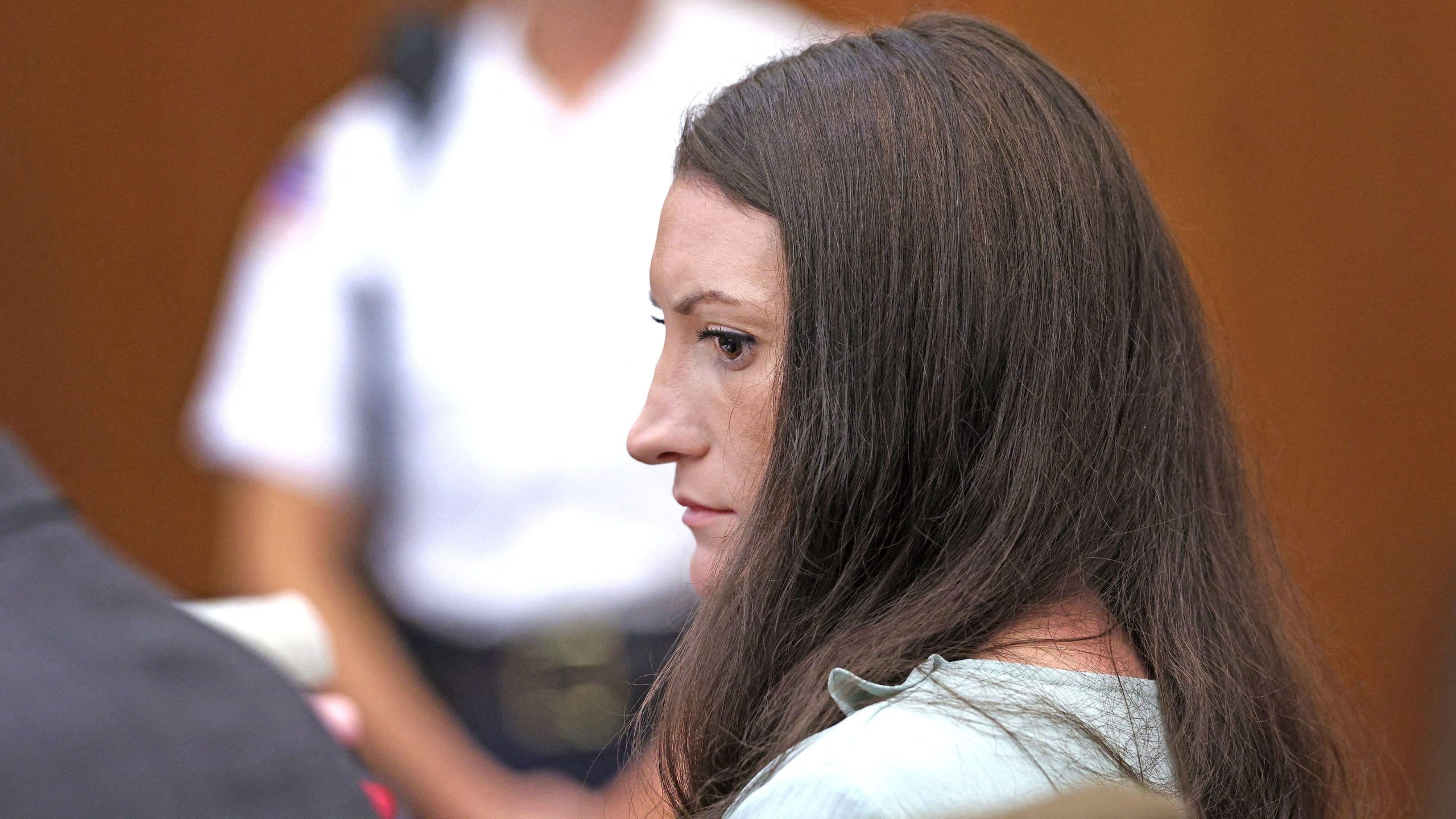
Prosecutors have rested their case in the trial of Lindsay Clancy, the Massachusetts mother accused of murdering her three children.
Clancy, 36, is on trial for murder in the January 2023 strangulation deaths of her three children – Cora, 5; Dawson, 3; and Callan, 8 months – at the family’s Duxbury, Massachusetts, home. She has pleaded not guilty to all three counts.
According to the prosecution, Clancy allegedly planned the killings by sending her husband to pick up takeout food and medicine, then, while he was gone, strangling the children to death with exercise bands. Afterward, Clancy cut her wrists and neck and jumped out of a second-story window, leaving her paralyzed.
Clancy’s defense argues that she is not guilty because she lacks criminal responsibility, which is more commonly known as an insanity defense. Defense attorney Kevin Reddington says Clancy she was suffering from postpartum depression and psychosis at the time of the killings.
The case has garnered extensive publicity between drawing attention to postpartum mental health and sparking widespread conspiracy theories.
Here’s a recap of the prosecution’s case.

How to watch Lindsay Clancy trial live today
Watch the live stream of Day 15 of the trial from the Plymouth, Massachusetts, courthouse below:
The Patriot Ledger, part of the USA TODAY network, is also providing live updates from inside the courtroom.
Prosecutors rest case against Lindsay Clancy. What they argued
Plymouth County Assistant District Attorneys Shanan Buckingham and Jennifer Sprague rested the prosecution’s case on Monday, Aug. 17 on the 14th day of testimony after calling more than 70 witnesses to the stand.
In opening statements, Buckingham painted Clancy as a “controlling, meticulous and manipulative” mother, arguing that she committed the murders because she could no longer control “every little detail” of her and her family’s life.
“This was a woman who no longer liked the life she thought she wanted. It was getting harder and harder to control,” Buckingham said.
When it came to Clancy’s mental health treatment in the months prior to the killings, Buckingham also alleged that she “chose to manipulate her providers” and “seek out the quick and easy fix when she was feeling depressed and anxious.”
“This is not a public debate about women’s mental health and how the medical system treats women. This case is about this defendant, Lindsay Clancy,” she said.

Reddington’s opening statement centered on Clancy’s struggle with postpartum depression, anxiety and ultimately psychosis. He alleged that she heard a male voice telling her to commit the killings.
He also described Clancy as a doting mother who “tried very hard to get the help she needed.”
“These children were loved and nurtured and cared for by her,” he said. “She didn’t want to get rid of her kids because of her selfish life as the government indicates. She loved those children right up to the time of their death.”
Highlights from key witnesses called by prosecution
Witnesses called by the prosecution ranged from first responders and medical providers to friends and family of the Clancys.
Here are a few highlights from key witnesses:
Patrick Clancy

Lindsay Clancy’s ex-husband Patrick Clancy testified that her mental health began declining around September 2022.
Beginning that month, Lindsay started seeing Dr. Jennifer Tufts, a psychiatrist who prescribed her several antidepressant and anti-anxiety medications. But Lindsay’s symptoms did not improve and she experienced negative side effects from them, Patrick said.
By November 2022, Lindsay was worsening, he testified. That month, she visited an emergency room after not sleeping for 48 hours. She also decided to seek out specialized perinatal care at a nearby clinic, where nurse practitioners prescribed additional psychiatric medications.
In December 2022, Lindsay told Patrick that she had “intrusive thoughts” about harming the children or something bad happening to them, but said she did not plan to hurt them, he said.
Also that month, Lindsay was admitted to Massachusetts General Hospital for suicidal thoughts. She then went to a facility for specialized postpartum treatment, where she stayed for one day after doctors said that “the program wasn’t right for her,” Patrick testified.
In January 2023, Lindsay and Patrick decided she should be admitted to McLean Hospital, a psychiatric facility. She stayed there for five days. Patrick recalled that it seemed Lindsay did not receive much treatment while there.

On Jan. 24, 2023, the day of the children’s deaths, Patrick Clancy testified that the family had a seemingly normal morning. Lindsay brought Cora to her annual physical, and when she returned, played with the children in the snow while Patrick worked from his basement office.
In the evening, Lindsay texted Patrick asking if he wanted to get takeout for dinner. He texted her his order, which she called in. Before leaving to pick up dinner, he rocked Callan on his knees and kissed Cora on the head, while Dawson was eating chicken nuggets on the couch, he said. Those were the last moments he saw his children alive.
When he returned home, Patrick recalled the house being quiet. He called out and didn’t get a response, then began checking upstairs for his wife and children.
Patrick went to his and Lindsay’s bedroom door, which was locked. Once he unlocked the door and entered, he “saw blood everywhere,” he said. Eventually, he made his way downstairs and outside, where he discovered his wife on the ground.
After he called 911 and emergency personnel arrived, Patrick went back inside the home to continue searching for the children. He found them in the basement with bands around their necks.
Christopher Clancy, Patrick’s father

Patrick’s father Christopher Clancy testified on Aug. 6 that Lindsay was “very mothering” and protective “like any mother would be.” He called his son, former daughter-in-law and their kids the “all-American family.”
Recalling the family’s Thanksgiving gathering in November 2022, Christopher Clancy said Lindsay “seemed quiet” and at times appeared to have a blank stare.
Asked by a prosecutor whether he saw Lindsay interact with son Dawson that day, Christopher Clancy recalled her “getting a little frustrated” with the 3-year-old.
“Dawson was being a little silly and she was trying to get him to sit down and she was just a little bit getting frustrated with him,” he said, adding that Lindsay took the boy by the arm to get him seated but it “wasn’t anything crazy.”
“He was a handful, but he was a good boy,” he later said of his grandson.
Christopher Clancy also recounted seeing his son’s family the week of Christmas, including for Mass on Christmas Day. Lindsay was quiet, but said she was glad she went to church, he said.
The night of the murders, Lindsay and Patrick had asked Christopher Clancy and his wife to have dinner with them, but they declined because they already had plans, he said.
He was later asked about his son’s demeanor the night of the murders.
“It was terrible,” Christopher Clancy said.
Elaine Rossi, former Clancy family nanny

Elaine Rossi, a woman who worked for the Clancy family as a part-time nanny from September to December 2022, testified on Aug. 5 that she had a close relationship with Lindsay.
Rossi, who the Clancys called “Lainey,” primarily took care of Callan and also helped with light housekeeping, laundry and food prep, she said.
She recalled often communicating with Lindsay via text or through written notes in notebooks left at the home. When asked by the defense whether she found the written notes overbearing, Rossi said, “Not at all.”
Rossi also testified that Lindsay told her she was “suffering from postpartum” and had been seeing doctors and trying medication. She also discussed her difficulty sleeping, Rossi said. The Clancys eventually let Rossi go in December after Lindsay decided not to go back to work, she said.
Asked if she had concerns about Lindsay’s interactions with the kids, Rossi said: “None at all. She was a wonderful mom.”
On cross-examination, Reddington asked Rossi if she loved Lindsay Clancy.
“I did love Lindsay, yes,” she said.
Dr. Jennifer Tufts, psychiatrist

Tufts, a psychiatrist, testified that Lindsay Clancy began seeing her because she was having difficulty sleeping and experiencing anxiety. Clancy was initially apprehensive about taking medication because she was concerned about experiencing side effects, Tufts testified.
During their first appointment in September 2022, Tufts initially prescribed Clancy sertraline – commonly known by its brand name, Zoloft. She also diagnosed Clancy with generalized anxiety disorder and adjustment disorder with depressed mood.
After picking up the medication and not taking it for several weeks, Clancy told Tufts in late October 2022 that she had begun taking the medication but experienced negative side effects. Tufts told her to stop taking the medication and recommended natural remedies instead.
Also in October, Tufts prescribed lorazepam – brand name Ativan – as needed when Lindsay had severe anxiety. Lindsay later reported that the Ativan helped her feel less anxious but did not help her sleep; she said she was using Benadryl as a sleep aid.
Tufts in October also prescribed the anxiety medication buspirone twice daily, as well as hydroxyzine – an antihistamine that would have similar effects to Benadryl – daily. At that point, Lindsay was still apprehensive about taking new medication, Tufts said.
In November, they discussed alternatives to Ativan because Tufts did not intend for Clancy to take it long term. Lindsay also said she had not begun taking the buspirone at that point. Separately, in November, Clancy began treatment at the South Shore Perinatal Behavioral Health clinic, where she was prescribed other medications by different providers, Tufts testified.
In December and January, Tufts and Clancy continued meeting to figure out a combination of medications that would address her anxiety and depression, as well as issues with sleep. Tufts testified that Clancy told her in December 2022 about intrusive thoughts and that she felt “close” to having suicidal thoughts.
“She denied having suicidal ideation, but she was feeling pretty badly,” Tufts testified. “She was close to it, meaning close to having some suicidal thoughts, and that she was feeling very hopeless, but she didn’t have any active thoughts of hurting herself, didn’t have any intention of doing anything, didn’t have any plans.”
Rebecca Jollotta, psychiatric nurse practitioner

Rebecca Jollotta, a psychiatric nurse practitioner at the South Shore Perinatal Behavioral Health clinic, testified that she began treating Lindsay in late November after she sought specialized postpartum care there.
Throughout the four-month period before the killings, Lindsay Clancy was treated primarily by Tufts and Jollotta, but saw both at different points.
Both Tufts and Jollotta testified that they did not have access to Clancy’s records from the other provider. They both testified that they did not request a release form from Clancy for access to the other facility’s medical records because they trusted Clancy was being forthcoming with them.
Jollotta testified that she took over Lindsay’s care at the South Shore Perinatal Behavioral Health clinic from Julie Paul, another psychiatric nurse practitioner. Paul, who left the practice in December 2022, briefly saw Clancy in November 2022 before transferring her care to Jollotta.
When Jollotta started treating Lindsay, she had just begun taking the antidepressant mirtazapine – brand name Remeron – but did not feel it had been effective. Jollotta eventually prescribed her quetiapine – brand name Seroquel – to help her sleep.
When it came to other medications, Lindsay was generally hesitant to changes because she was concerned about side effects, Jollotta testified.
Between appointments in early December, Lindsay messaged Jollotta frequently through the clinic’s online portal.
In one message read in court, Lindsay expressed concern about dependence to Ativan: “I feel addicted to it and I feel like I’m not being heard that that is a possibility,” she wrote. Jollotta testified that she was not concerned about Lindsay’s dependence to Ativan.
Lindsay wrote in another message: “I feel like I’m going to die and I don’t care.” Jollotta said she did not take this to be suicidal thoughts or ideation, but responded with additional resources for support.
On Dec. 6, 2022, Jollotta met with Lindsay at her husband Patrick in person. During that visit, Lindsay described a past instance when, after having taken Zoloft, she did not sleep for 48 hours but was not tired.
Jollotta said she raised concerns about symptoms of bipolar disorder, but that Lindsay’s symptoms did not meet the level of a diagnosis at that time.
When asked about Lindsay and Patrick’s reactions, Jollotta said, “I recall Patrick saying, ‘My wife is not bipolar.’ Lindsay looked at me. She did not say anything.”
Throughout December, Jollotta continued treating Lindsay, prescribing Valium and increased doses of Seroquel. While Lindsay continued expressing “intrusive thoughts,” Jollotta said she was not concerned about her safety and that these thoughts were common in her patients.
What could happen to Lindsay Clancy?
Lindsay Clancy is facing three counts of first-degree murder. She has pleaded not guilty to all three counts.
While more commonly known as not guilty by reason of insanity, Clancy’s defense under Massachusetts law is called a lack of criminal responsibility.
According to a definition read in court by judge William Sullivan, a person is not criminally responsible for their conduct if they have “a mental disease or defect, and as a result of that mental disease or defect, lacks the substantial capacity either to appreciate the criminality or the wrongfulness of her conduct or to conform her conduct to the requirements of the law.”
In Massachusetts, first-degree murder carries a mandatory sentence of life in prison without parole.
Under Massachusetts law, if a defendant is found not guilty or lacking criminal responsibility, they are typically committed to a state hospital for mental health treatment and evaluation.
Clancy has been held at Tewksbury Hospital, a facility in Tewksbury, Massachusetts, for court-ordered mental health treatment since May 2023.
Melina Khan is a national trending reporter for USA TODAY. Keep up with her on X @melinakh and Instagram @bymelinakhan.
Original source: https://www.usatoday.com/news/nation/
Author

seoexperts1994@gmail.com
Related Posts

Mayor moves to ban Cornell event permits after rape allegations
- 0
- 211 words
The mayor of Ithaca, the New York city home to Cornell University, called for a ban on student event and special event...
Read out all
Federal court halts execution of Christa Pike in 11th hour
- 0
- 211 words
A federal court has stayed the execution of Christa Pike less than two hours before it was set to be carried out....
Read out all
‘A tired refrain.’ Critics fight adding Trump’s name to Kennedy Center
- 0
- 220 words
WASHINGTON – President Donald Trump's opponents to putting his name on the Kennedy Center called his argument that the venue would fail...
Read out all
Israel-bound jet lands in Saudi Arabia after apparent pilot fight
- 0
- 214 words
A commercial passenger jet bound for Tel Aviv from Dubai made an emergency landing in Saudi Arabia after an apparent fight broke...
Read out all
Trump to send $500 ACA refund checks to nearly 1 million Americans
- 0
- 204 words
WASHINGTON — President Donald Trump is set on Sept. 30 to start sending $500 checks to nearly 1 million Americans his administration...
Read out all
In 2016, Gretchen Carlson’s lawyer warned: “They’ll kill you”
- 0
- 124 words
More VideosThe battle to stop deepfake abuse before it spreadsSee shark swim in severe New Jersey floodingWhy are so many ICE employees...
Read out all