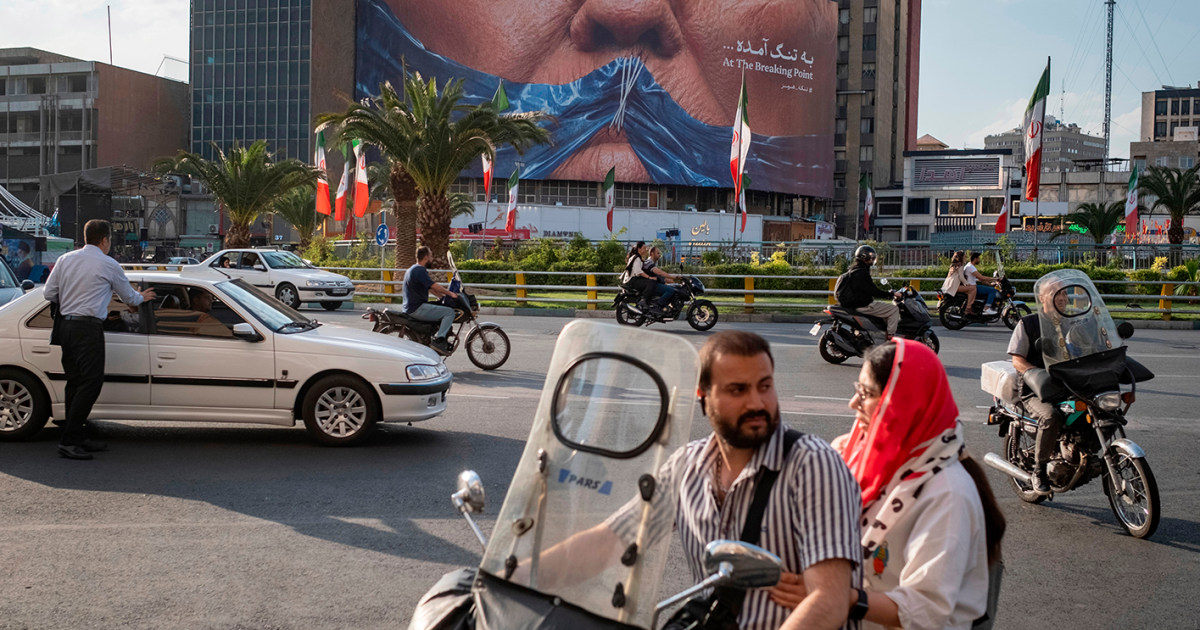
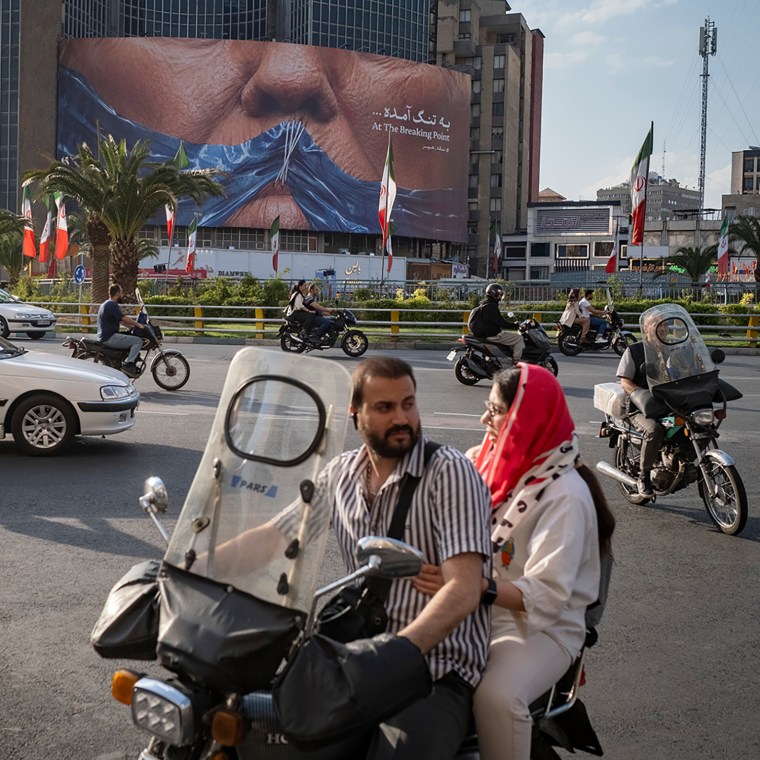
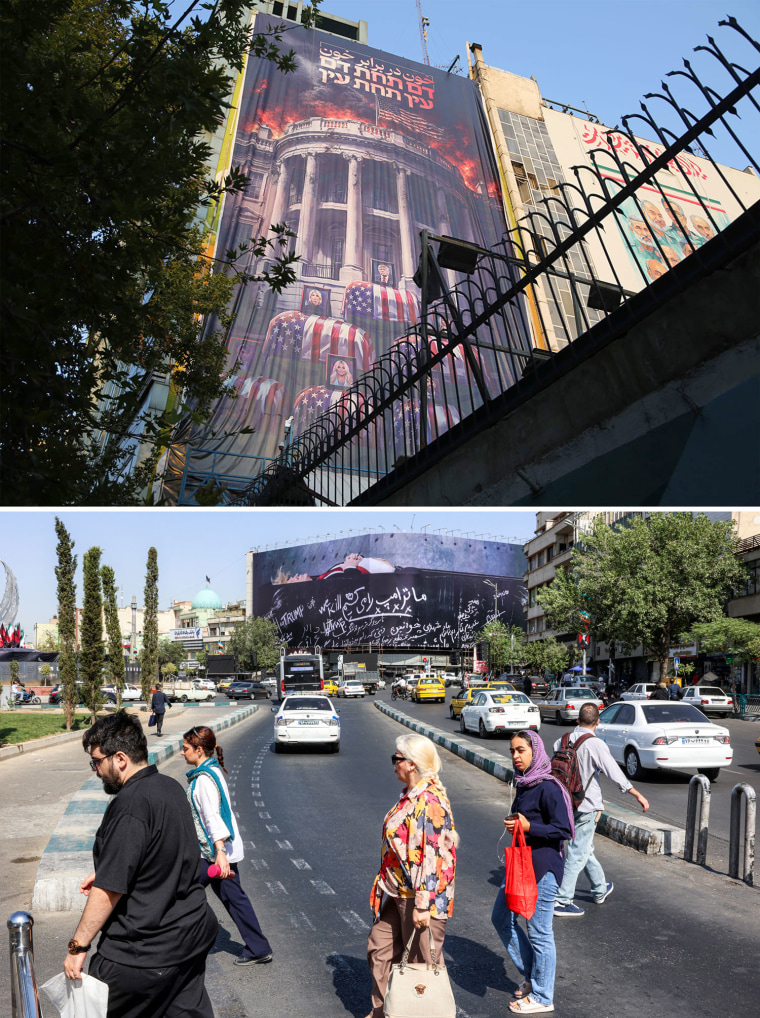
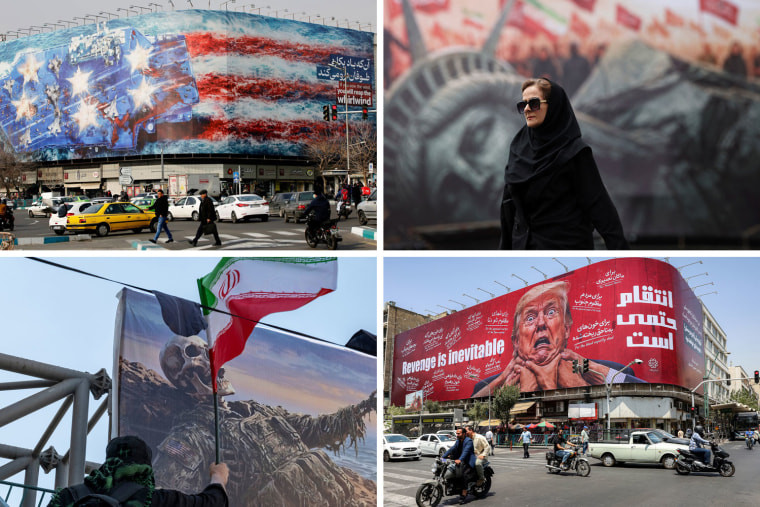
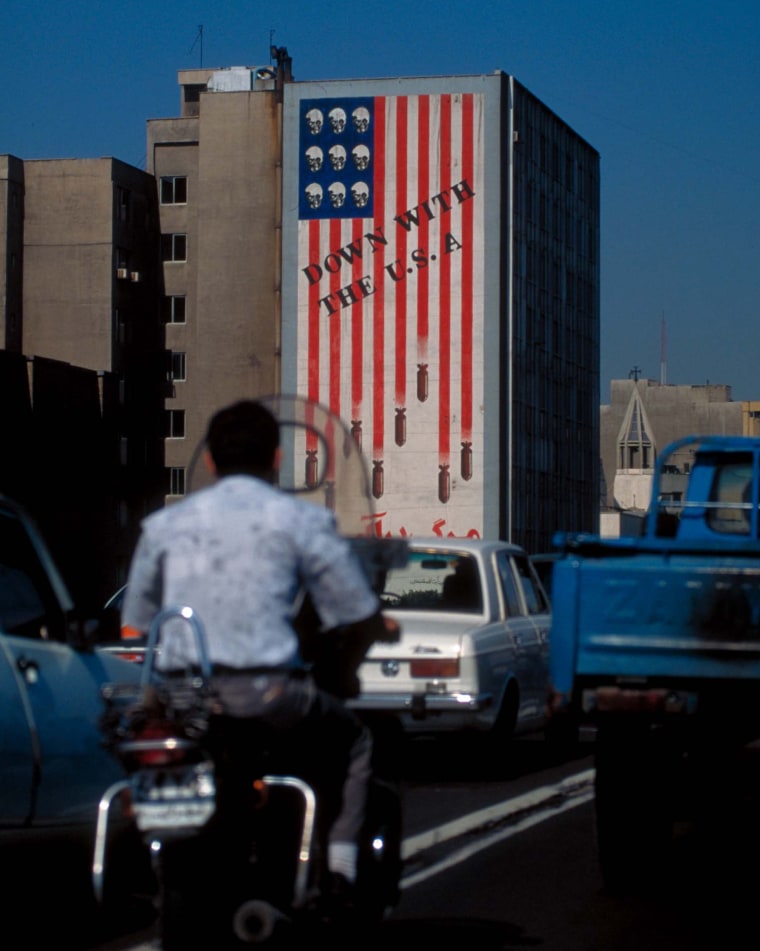
The billboards are state-sponsored, plastered across Iran’s capital and far from subtle. One features an image of President Donald Trump lying in a casket; another shows the White House on fire; a third is a parody of the American flag with skulls in place of the stars and bombs dropping from the stripes.
Alongside ads for a multitude of products such as cars and shampoo, the giant billboards have become familiar sights to the people of Tehran in recent years. But since the country’s supreme leader, Ayatollah Ali Khamenei, was killed in an airstrike on the first day of the war launched by the United States and Israel, the messaging has become bolder and the tone more violent during the almost six-month conflict.
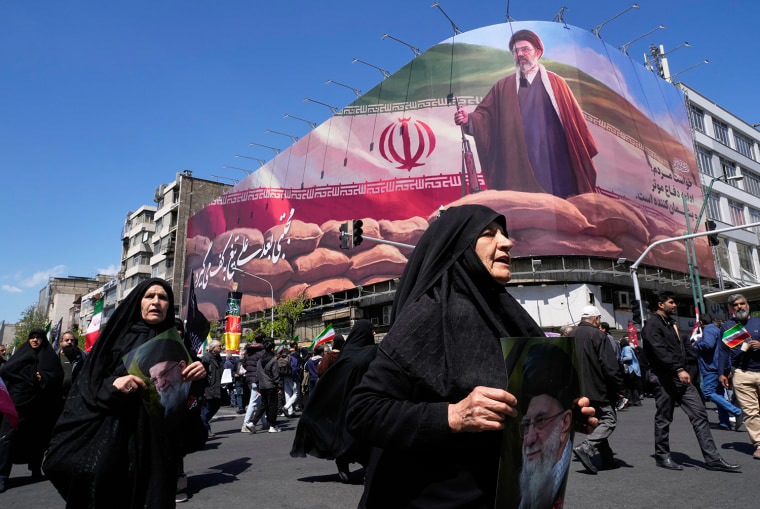
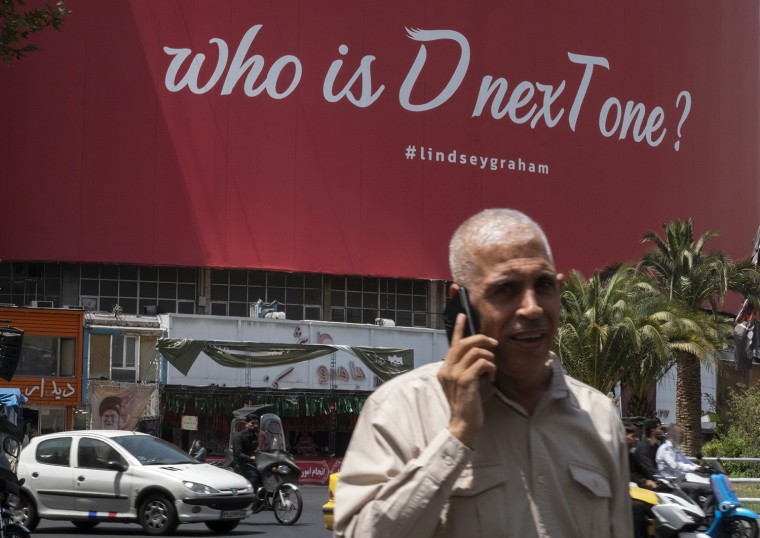
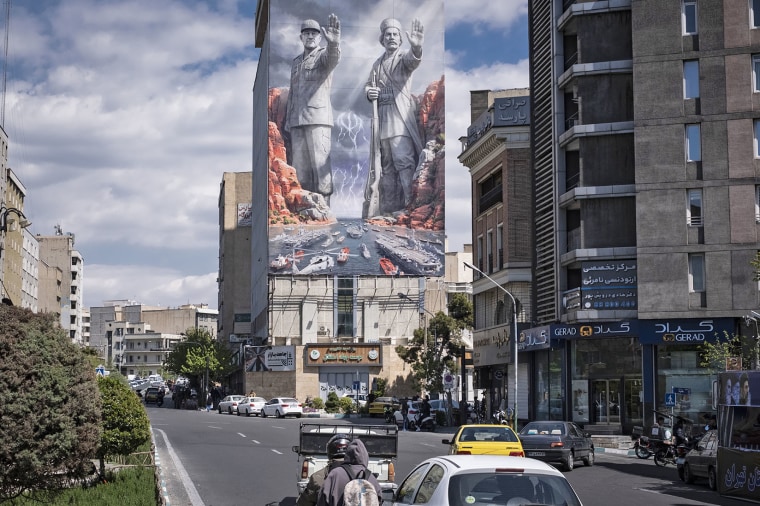
Pictures of them captured by Iranian photojournalists over the last six months show people going about their daily lives next to the huge billboards with the violent imagery and messaging.
One shows a busy intersection last month near Tehran’s central Enghelab Square, where a huge billboard featuring benign images of Khamenei was replaced with one of Trump lying in a casket, his hands together over his belly.
In mock handwritten text, it refers to the sailors killed by a torpedo attack on the Iranian warship Iris Dena by the USS Charlotte attack submarine, along with a death threat aimed at Trump.
Less than two weeks later, it was replaced by an image featuring Trump being strangled by several pairs of hands. “Revenge is inevitable,” a message in English said on it.
A total of 17 U.S. service members have died since the start of the war with Iran, according to the latest figures issued by U.S. Central Command on July 18. On April 20, Iran’s semiofficial Mehr News Agency quoted Abbas Masjedi, the head of Iran’s Forensic Medicine Organization, as saying that 3,375 people had been killed in the war.
Anti-American rhetoric has long been a staple of Iran’s messaging since the 1979 Islamic Revolution, and for more than three decades, a hand-painted mural parodying the Stars and Stripes has watched over passing traffic in the capital, Tehran.
In place of the stars, skulls and bombs can be seen dropping from the stripes, which are emblazoned with the message “Down With The U.S.A.” across the middle.
While that one is clearly painted, the more modern images appear to have been generated with the help of artificial intelligence, including one depicting the White House on fire. Written in Persian, the words “blood for blood” sit above the flames.
Iran has used AI to boost its online propaganda efforts throughout the war, and one company, Explosive Media, has published dozens of Lego-inspired videos varying from short snippets to three-minute music videos mocking Trump and his administration.
The company, whose work some have dubbed “slopaganda,” has told NBC News that it does not work for the Iranian government and that the government does not have a say in the content of its videos.
Trump himself has posted plenty of AI-generated images, including some featuring Iran’s ships and energy infrastructure being blown up and taken over by the U.S. military.