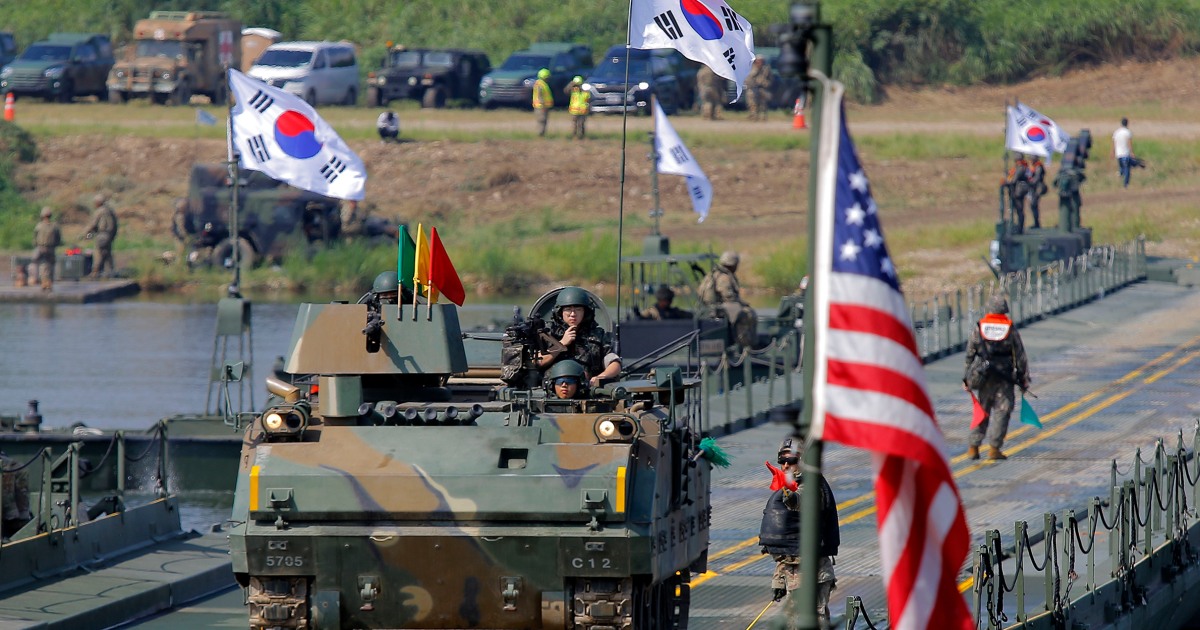
SEOUL, South Korea — The commander of U.S. Forces Korea visited South Korea’s Defense Ministry on Tuesday to discuss plans to scale back joint U.S.-South Korea military exercises, according to media reports.
The ministry and USFK did not immediately comment, but reports of the visit by Commander Xavier Brunson came after President Donald Trump instructed the Pentagon to “substantially reduce” the drills, and said North Korean leader Kim Jong Un had responded to his outreach.
Earlier Tuesday, South Korean President Lee Jae Myung called for stronger independent defense capabilities, while saying that annual civil defense exercises held alongside the joint military drills were defensive and not intended to threaten North Korea.
Trump orders reduction of joint exercises with South Korea
Lee said Seoul should proceed without disruption with the planned transfer of wartime operational control from the United States during his term, in line with the government’s existing plan.
“A strong alliance makes the foundation of security stronger, and strengthening our own capabilities increases our value and necessity as an ally,” Lee said in a cabinet meeting, describing the U.S.-South Korea alliance and independent defense as mutually reinforcing.
Lee said maintaining peace was the government’s top priority, but that South Korea also needed to prepare for a “worst-case scenario,” underscoring the need for stronger military capabilities of its own.
He also called for faster progress on South Korea’s nuclear-powered submarine program and for developing officers capable of integrated operations, as distinctions between battlefields become less clear.
At a National Security Council meeting Tuesday, Lee said the civil defense exercises held alongside major U.S.-South Korea military drills were defensive in character.
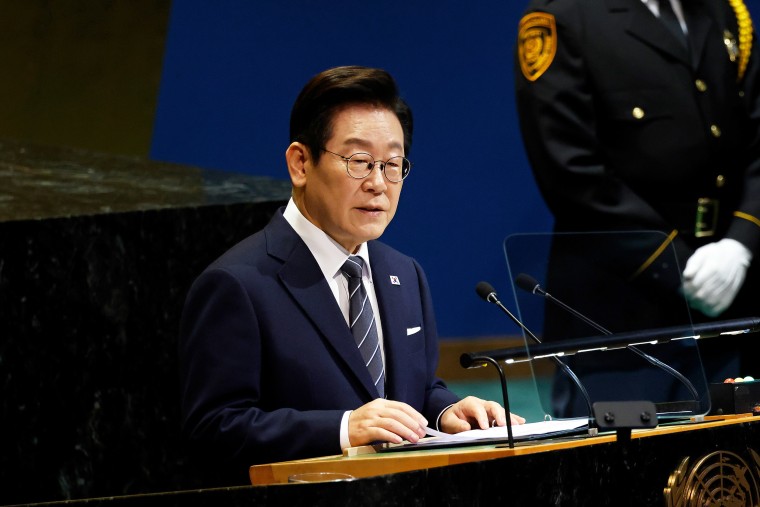
South Korea has no intention of using the exercises to attack North Korea or raise tensions on the Korean Peninsula, Lee said, adding that their purpose was to protect citizens’ daily lives rather than target any particular party as an enemy, according to a statement by the presidential Blue House.
In a separate briefing on Tuesday, South Korea’s National Security Adviser Wi Sung-lac said Seoul hoped Trump’s message would help revive dialogue between Washington and Pyongyang.
“We hope the friendly relationship between the U.S. and North Korean leaders will lead to meaningful North Korea-U.S. dialogue,” Wi told reporters.
Such engagement, he said, could bring tangible progress toward peace and stability on the Korean Peninsula and help restart broader discussions.
Discussions over the joint military exercises come ahead of a visit by Chinese Foreign Minister Wang Yi to South Korea on Wednesday and Thursday for talks expected to cover developments on the Korean Peninsula and regional security issues.
The presidential office has also said it will continue coordinating closely with Washington on the allies’ combined defense posture and military exercises.
The annual Ulchi Freedom Shield exercises began Monday and are scheduled to run through Aug. 27.