
- 0
- 944 words
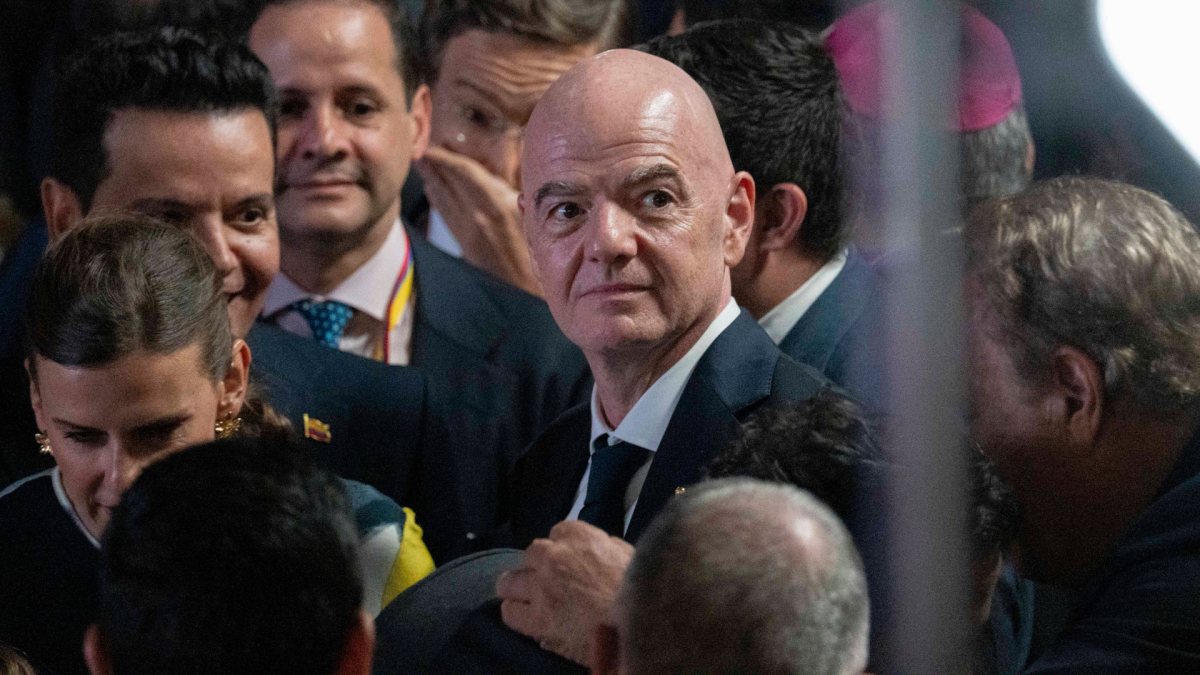
FIFA president Gianni Infantino is losing the support of three confederations ahead of the 2027 elections after the failed proposed plan to sell stakes in the World Cup to private investors via the so-called FFE (FIFA Forward Enterprise) plan. After the plan failed to go through, the world of soccer remains divided.
UEFA, the European soccer governing body, immediately emerged as the leading confederation to oppose Infantino’s plan, followed by AFC (the Asian Football Confederation) and CONCACAF (Confederation of North, Central America and Caribbean Association Football) while both CAF (Confederation of African Football) and CONMEBOL (the one running South American soccer) have backed Infantino following the recent events.
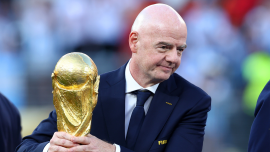
UEFA, alongside AFC and CONCACAF, wrote a joint statement that the failed FFE process represented a “profound failure of judgment” and accused Infantino of acting like someone who “believes the game is answerable to him.” According to multiple reports, all three confederations have started initial talks to organize competitions without FIFA, as the backlash against Infantino builds ahead of the 2027 FIFA elections, when Infantino is expected to run for another term.
It’s also understood, according to the Associated Press, that the three confederations will give Infantino the option to step down “with dignity” without seeking re-election in March 2027. UEFA has also recently announced their intention to boycott all FIFA tournaments.
Full statement from UEFA, AFC and Concacaf
Dear Football Family,
Football is the world’s greatest shared passion. It belongs to no individual and no institution.
“It belongs to the players, the fans, the clubs, the Member Associations and every institution entrusted with safeguarding its future.
It is in that spirit, as confederations representing its members, that we speak collectively today.
The growth over the past decade has been real. But that progress was never the work of one individual. It was the product of FIFA, the Confederations, the Member Associations, and the thousands of people who dedicate their lives to the game.
The expanded tournaments, the awarding of the 2030 and 2034 FIFA World Cups, the distribution of resources to associations. These were shared achievements, agreed together, delivered together.
This is not about money. The Confederations have already called for the responsible distribution of FIFA’s vast existing reserves to further strengthen investment in the development of Member Associations.
Nor is it about any Member Association losing the support it has earned, despite the fearmongering directed at our membership to suggest otherwise. Nor is it about revisiting the expansion of competitions, World Cup allocations, or any other decisions reached collectively. Those decisions were made together, and they must stand.
This is about something more fundamental: the integrity of the game, and the integrity of those elected to lead it.
Leadership in football is not a possession. It is not about holding – or demanding – power to be held. It is a duty of service to the football family that entrusts it.
When trust is broken through deception, when an individual places himself above the collective that entrusted him with authority, that duty has been abandoned.
FIFA’s recent letter to its Vice-Presidents and 211 Member Associations acknowledges that mistakes were made in the process. It treats this as a failure of communication, when what football witnessed was a failure of judgment. A proposal advanced on a compressed timeline, without meaningful consultation, and pushed toward a deadline before Member Associations could properly review its terms is not the product of an oversight — it is the product of a design intended to limit scrutiny.
It did not acknowledge that the proposal itself was inherently wrong. There remains no recognition that attempting to sell an interest in the FIFA World Cup was a profound failure of judgment — not just a procedural misstep, but a fundamental breach of trust with the very institutions FIFA exists to serve.
FIFA has also committed to presenting a full report on these events to the FIFA Council, once again failing to recognize that proper governance in the face of such a profound lack of judgment would require that such a review be conducted by a fully independent third party, not by FIFA itself, its staff, or by any stakeholder within football. The FIFA administration should play no role in conducting the review.
As per previous correspondence, all relevant documents and records must be preserved in accordance with UEFA’s communication on preservation of documents.
FIFA’s own letter also confirms that only one elected official was present at the leadership meeting in Morocco. No FIFA Council members or Member Associations were invited to participate. Only the management committee, composed of FIFA-employed senior staff, was present.
This recent meeting, where a select number of members of the FIFA Management Committee—not the full Committee—were summoned abroad, rather than leadership going to Zurich to address the heart of FIFA, its staff, only reinforces these concerns and represents a continuation of the very pattern of conduct that brought us to this moment. It is not the conduct of a custodian of the game, but of one who believes the game is answerable to him.
There is silence where there should be accountability, distance where there should be openness.
These are not the qualities football deserves in its leadership. That is why we have taken this stance: not lightly and not alone, but together, and out of duty to the game we serve.
Football’s strength has always been its unity. We call for that unity to be honoured now, for leadership that serves football, not seeks to command it.
Original source: https://www.cbssports.com/
Author

seoexperts1994@gmail.com
Related Posts
Ben Simmons eyeing NBA comeback as he plays with Australian national team
- 0
- 397 words
It's August, which means it's time for the annual Ben Simmons headlines in the midst of the NBA's offseason doldrums. The No....
Read out all
College basketball rankings: Addition of fifth-year players gives new look to early preseason Top 25 And 1
- 0
- 2,660 words
UConn coach Dan Hurley took some time the other day to bemoan the fact that some of his colleagues in college basketball...
Read out all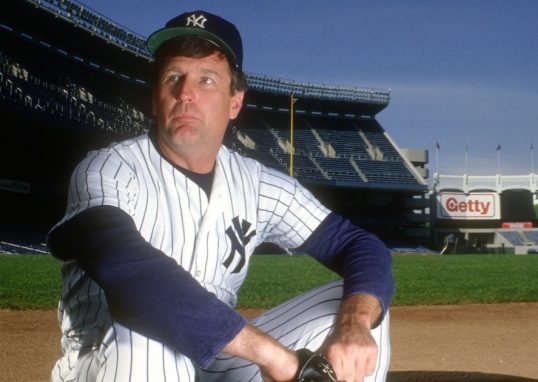
Tommy John, ex-Yankees pitcher and namesake of career-saving surgery, says goodbye amid health issues
- 0
- 535 words
Tommy John, ex-Yankees pitcher and namesake of career-saving surgery, says goodbye amid health issuesThe lefty didn’t attend Old-Timers’ Day at Yankee Stadium...
Read out all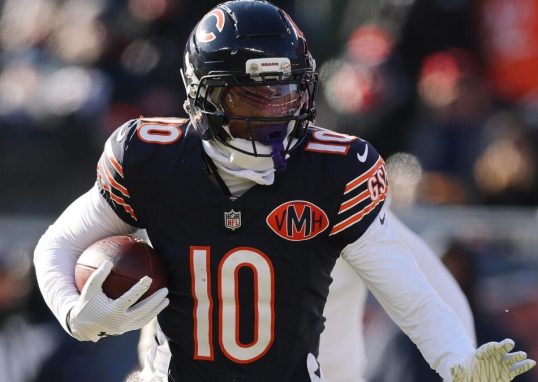
Bears’ Luther Burden III sidelined with groin injury: Here’s when breakout candidate could return
- 0
- 378 words
The Chicago Bears experienced a scary moment during Saturday's practice when second-year wideout Luther Burden III and cornerback Tyrique Stevenson suffered injuries...
Read out all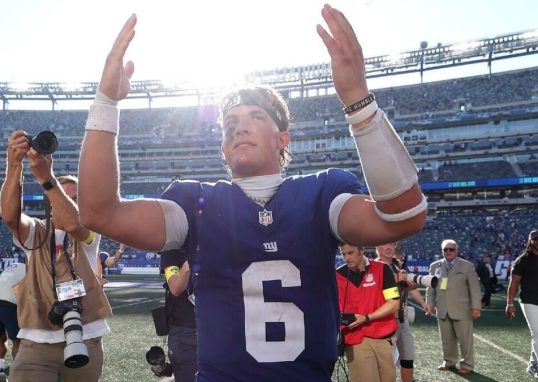
Have Giants, Saints finally found franchise QBs? History points to Year 2 leaps for Jaxson Dart, Tyler Shough
- 0
- 1,481 word
The Giants have spent the better part of a decade looking for Eli Manning's replacement. The Saints have taken nearly as long...
Read out all
MLB Power Rankings: Dodgers proving they’re far from infallible, so who will take advantage?
- 0
- 1,609 word
Like it or not -- and I definitely do not -- the rest of the 2026 Major League Baseball season will be...
Read out all