
- 0
- 1,066 word
Why cruises use tenders in port – and why they may not be accessible
 Nathan Diller
- Cruise ships use smaller boats called tenders to ferry passengers ashore at ports that are too shallow or lack a large enough pier.
- Tendering can be inaccessible for travelers with mobility issues, often preventing them from going ashore.
- The tendering process can cause delays getting off the ship, and rough seas can sometimes lead to port cancellations.
Cory Lee has been on dozens of cruises but has only been able to visit a tender port once.
On a visit to Grand Cayman during a 2024 trip with Disney Cruise Line, Lee, who uses a wheelchair, was able to board and disembark the tender – a small boat used to ferry guests between an anchored cruise ship and the shore – via a portable ramp. On other occasions, however, the tender ports weren’t accessible, as the process often involved crossing a large gap between the tender and the ship and descending stairs into the boat.
“I mean it’s really frustrating just to see everyone else going ashore and having a great time on shore excursions, and then I’m kind of stuck on the ship with just minimal staff and trying to make the best of it,” Lee, an accessible travel blogger, told USA TODAY.
While there are perks to having much of the ship to himself, he’s missed out on visiting places like Kotor, Montenegro, as a result. “That would have been a new country for me, and I had never been to Montenegro, and I would have loved to be able to visit, but it just wasn’t possible.”
Accessibility is just one feature that makes tender ports different from standard stops during a cruise. Here’s what to know.

Why do cruise ships use tenders?
Cruise ships use tenders for a variety of reasons, according to Susan Guthrie, a travel agent and owner of Cruisin’ with Susan and More, affiliated with Travel with Sparkle. Some harbors are too shallow for large vessels; in other ports there are protected reefs or other environmental restrictions; and some lack a pier large enough to accommodate the ship.
“On a typical seven-night itinerary, guests may encounter one or two tender ports,” she said in an email. “It is uncommon to have an entire cruise without docked ports, although this can happen on some expedition-style cruises where ships visit smaller, remote destinations.”
Which cruise ports require tendering?
Tenders are commonly used “throughout the Caribbean, smaller European islands, and some scenic destinations where large cruise ships cannot dock directly at a pier,” according to Guthrie.
Along with Grand Cayman and Kotor, those stops could include Bonaire, St. Barts, Cabo San Lucas, Santorini and others. However, some may tender while others dock depending on port conditions, the ship’s size and other factors.
When I visited La Spezia, Italy, in July during a cruise aboard Royal Caribbean’s Legend of the Seas – which can carry just over 5,600 guests at double occupancy – guests had to take short tender rides to and from shore. Princess Cruises’ 4,300-guest Sun Princess, meanwhile, was docked at the pier.
“Due to current water-depth limitations, Legend of the Seas uses tender operations, a standard and well-established practice that enables guests to enjoy the destination safely and comfortably,” Royal Caribbean previously told USA TODAY in an email.

How does the cruise ship tender process work?
Cruise lines typically share information about tender operations the night before the stop, or early that morning. Passengers booked on shore excursions typically receive priority access.
During my stop in La Spezia, I gathered with other guests in the ship’s theater shortly before 8 a.m., was seated with my tour group and given a number. When our number was called, we made our way to the gangway together to board the tender boat.
Passengers exploring on their own may need to pick up a tender ticket depending on the cruise line and the port. “Once the ship has cleared the initial rush, open boarding may begin and tickets may no longer be required,” Guthrie said.
Tender rides often last around five to 20 minutes.
While Guthrie said tender ports “are often some of the most beautiful and memorable destinations,” there are some potential downsides.
For starters, tender boarding can slow down disembarkation. “During busy times, this process can sometimes add significant time before guests are able to go ashore,” she said.

Windy weather and rough seas can also make the tender rides uncomfortable – or rule them out altogether. “If the captain determines conditions are unsafe, the port visit may be cancelled entirely,” Guthrie noted.
When it comes to accessibility, Lee said the “easiest way to get the most accurate information is to just call the cruise line and ask them which ports of call are docked vs. tendered.” He also recommended joining Facebook groups or other online communities of cruisers with disabilities, where travelers can get firsthand accounts.
Some setups are easier than others. For example, Celebrity Cruises guests with mobility devices may be able to board tenders using a stair platform lift connected to the Magic Carpet, a cantilevered platform on its Edge Series ships that can move up and down the vessel.
“During tender operations, the Magic Carpet is typically positioned next to the tender boat, with a ramp providing access between the two,” Celebrity told USA TODAY in an email, though the cruise line noted that local boats and port facilities may differ from stop to stop and the level of accessibility can vary.
For any travelers heading out and about, it’s important to take note of the final tender time, which may be quite a bit earlier than the cruise’s departure time.
Guests generally do not need tender tickets for the return journey. However, they will need to scan their stateroom key card when entering or exiting the ship.
Guthrie also noted that tender lines can be long at the end of the day, and recommended arriving at the tender pier between 30 and 60 minutes “earlier than you think you need to.”
(This story was updated to add new information and refresh headlines.)
Nathan Diller is a consumer travel reporter for USA TODAY based in Nashville. You can reach him at ndiller@usatoday.com.
Original source: https://www.usatoday.com/travel/
Author

seoexperts1994@gmail.com
Related Posts
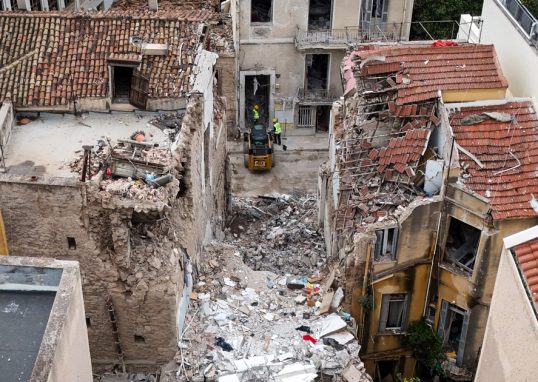
6 dead, including 4 Americans, recovered from collapsed building near the Acropolis in Greece
- 0
- 212 words
ATHENS, Greece — Rescuers combing through the rubble of a building that collapsed in a blast in the Greek capital’s tourist district...
Read out all
First papal visit to France in almost 2 decades attracts hundreds of thousands of worshipers for Mass
- 0
- 207 words
Updated on: September 26, 2026 / 12:58 PM EDT / CBS/AP Hundreds of thousands of people packed Paris' iconic Champs-Élysées Avenue for...
Read out all
Trump says he has rejected Iranian proposal to reopen Strait of Hormuz
- 0
- 221 words
President Donald Trump said Saturday that he has rejected an Iranian proposal to reopen the Strait of Hormuz, after Iranian officials indicated...
Read out all
Anger grows across Spain after elderly woman evicted from her home of 70 years
- 0
- 214 words
An 87-year-old Spanish woman was forcibly evicted Wednesday from the Madrid apartment she had lived in for more than 70 years, in...
Read out all
Brazil’s Lula bans online betting as re-election race tightens
- 0
- 213 words
SAO PAULO — Brazil’s President Luiz Inácio Lula da Silva on Friday announced a ban on online betting operations in Latin America’s...
Read out all
Skip fall foliage and chase sunshine at these tropical escapes
- 0
- 215 words
Fall gets a lot of love from people celebrating the cooler temperatures, changing leaves, and spooky stories. But if you’re a summer-always...
Read out all