
- 0
- 669 words
Will the solar eclipse be visible on Aug. 12 where you live?
 Fernando Cervantes Jr.
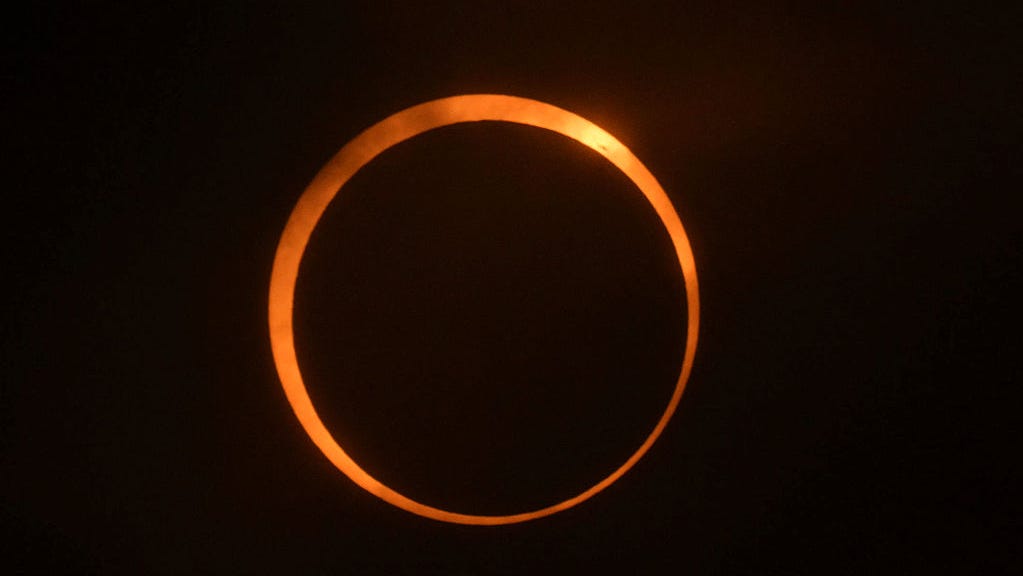
Millions of Americans will get a chance to see a partial solar eclipse on Wednesday, Aug. 12, but don’t expect the dramatic daytime darkness that captivated the country during the 2024 total solar eclipse.
While parts of Europe, Greenland and Iceland will witness a total solar eclipse, viewers across portions of the East Coast, Midwest and Alaska will see the moon partially cover the sun, creating a rare celestial show and some noticeable dimming in the sky.
The eclipse begins around 11:34 a.m. ET and reaches its peak at 1:46 p.m. ET, according to NASA.

Will you be able to see the eclipse?
If you live in one of 27 states or Washington, D.C., there’s a chance you’ll catch at least part of the eclipse, weather permitting.
The partial eclipse will be visible in parts of:
- Alaska
- Connecticut
- Delaware
- Illinois
- Iowa
- Indiana
- Kentucky
- Maine
- Maryland
- Massachusetts
- Michigan
- Minnesota
- Montana
- New Hampshire
- New Jersey
- New York
- North Carolina
- North Dakota
- Ohio
- Pennsylvania
- Rhode Island
- South Dakota
- Vermont
- Virginia
- Washington, D.C.
- West Virginia
- Wisconsin
How dark will it get?
Not very, at least compared with a total solar eclipse.
According to NASA, parts of the East Coast and Alaska could notice some dimming as the moon blocks a portion of the sun. But unlike the 2024 eclipse, the sky won’t turn dark and stars won’t suddenly appear in the middle of the day.
Still, the event offers a rare opportunity to watch one of nature’s most precise cosmic alignments unfold overhead.
Why this eclipse is drawing attention
Total solar eclipses occur somewhere on Earth only about once every 18 months, making them among the rarest recurring celestial events.
Many Americans still remember the spectacular April 8, 2024, total solar eclipse, when the moon completely blocked the sun across a broad stretch of the United States. While this week’s eclipse won’t bring totality to U.S. viewers, it’s still one of the most anticipated skywatching events of 2026 and offers a rare chance to see a dramatic partial eclipse.
The event comes just one year before the Aug. 2, 2027, total solar eclipse that NASA has dubbed the “Eclipse of the Century.” That eclipse is expected to feature an exceptionally long period of totality, lasting up to 6 minutes and 23 seconds at its peak, making it one of the longest total solar eclipses visible anywhere in the world in decades.
This week’s eclipse may not darken skies across America, but it’s the latest reminder that one of nature’s most spectacular shows is building toward an even bigger celestial event next year.

How to watch safely
Looking directly at the sun during a partial solar eclipse can cause serious eye damage.
NASA recommends using certified solar eclipse glasses or handheld solar viewers designed specifically for eclipse viewing. Regular sunglasses are not safe for observing the sun.
Anyone using cameras, telescopes or binoculars should also ensure they have approved solar filters.
No eclipse glasses? Here’s another option
You can safely view the eclipse using a pinhole projector, which projects an image of the sun onto a nearby surface rather than requiring direct viewing.
A basic pinhole viewer can be made using simple household materials such as cardboard and aluminum foil.
The bottom line
Wednesday’s eclipse won’t bring the jaw-dropping darkness Americans experienced in 2024. But for millions across the U.S., it will still provide a rare chance to see the moon take a visible bite out of the sun, making it worth stepping outside and looking up, safely, during the middle of the day.
USA TODAY’s Julia Gomez, Melina Khan and Saleen Martin contributed to this report.
Fernando Cervantes Jr. is a trending news reporter for USA TODAY. Reach him at fernando.cervantes@usatodayco.com and follow him on X @fern_cerv_
Original source: https://www.usatoday.com/news/nation/
Author

seoexperts1994@gmail.com
Related Posts
Mayor moves to ban Cornell event permits after rape allegations
- 0
- 211 words
The mayor of Ithaca, the New York city home to Cornell University, called for a ban on student event and special event...
Read out all
Federal court halts execution of Christa Pike in 11th hour
- 0
- 211 words
A federal court has stayed the execution of Christa Pike less than two hours before it was set to be carried out....
Read out all
‘A tired refrain.’ Critics fight adding Trump’s name to Kennedy Center
- 0
- 220 words
WASHINGTON – President Donald Trump's opponents to putting his name on the Kennedy Center called his argument that the venue would fail...
Read out all
Israel-bound jet lands in Saudi Arabia after apparent pilot fight
- 0
- 214 words
A commercial passenger jet bound for Tel Aviv from Dubai made an emergency landing in Saudi Arabia after an apparent fight broke...
Read out all
Trump to send $500 ACA refund checks to nearly 1 million Americans
- 0
- 204 words
WASHINGTON — President Donald Trump is set on Sept. 30 to start sending $500 checks to nearly 1 million Americans his administration...
Read out all
In 2016, Gretchen Carlson’s lawyer warned: “They’ll kill you”
- 0
- 124 words
More VideosThe battle to stop deepfake abuse before it spreadsSee shark swim in severe New Jersey floodingWhy are so many ICE employees...
Read out all