
- 0
- 749 words
Gas prices are climbing. How it impacts your wallet
 Betty Lin-Fisher
U.S. consumers are going to continue to feel the pinch of higher prices for everyday expenses, such as gas, as the ceasefire with Iran expired.
President Donald Trump said on Aug. 18 that no talks are taking place with Iran to continue a ceasefire, which had a 60-day deadline pass on Aug. 17.
Americans have already been tightening their wallets as they face higher prices at the grocery store.
When gasoline and transportation prices increase, they trickle down to many other categories, Shikha Jain, a Simon-Kucher partner and lead of the consumer sector for North America, told USA TODAY.
“It’s not just going to be at the gas pump. There might be flow through into the grocery store, but also with anything that has logistics tied to it and anything that’s trucked, anything that uses gas,” she said. That can include anything with delivery fees or shipping, Jain said.

What’s happening with US gas prices?
Upward pressure may continue on gasoline and diesel prices, said Greg Upton, executive director and associate research professor at the Center for Energy Studies at Louisiana State University.
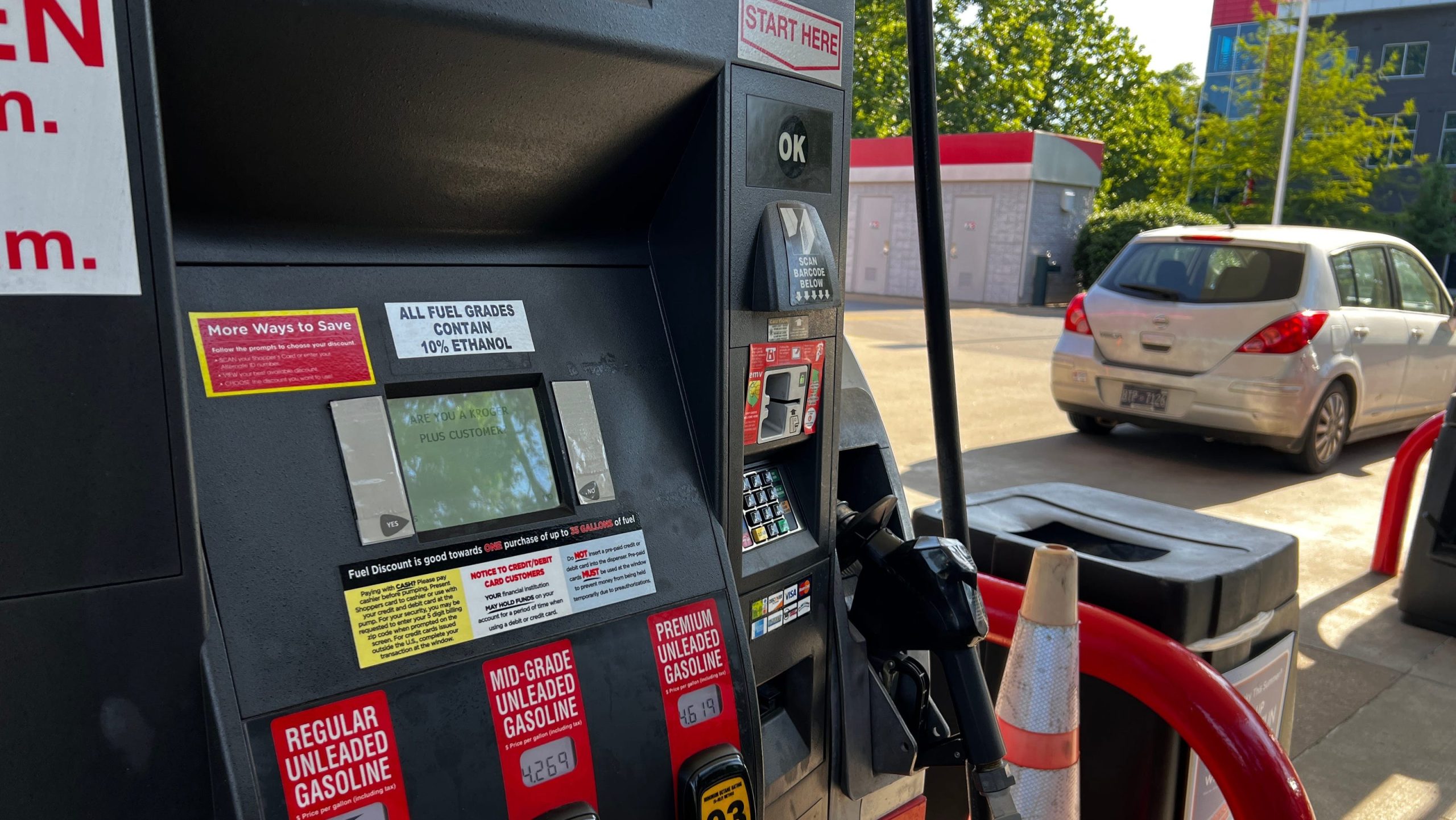
The average price of gasoline nationally is at $4.02 a gallon, or 7.7 cents higher than the previous week, according to GasBuddy data as of Aug. 17. The national average is up 3.6 cents from a month ago and is 93.1 cents per gallon higher than a year ago. The national average price of diesel rose 14.3 cents in the last week and stands at $5.418 per gallon.
“Average gasoline prices climbed back above $4 per gallon over the last week, with prices rising in slightly more states than they fell, as rebounding oil prices driven by the continued closure of the Strait of Hormuz and ongoing Ukrainian attacks on Russian oil refineries kept upward pressure on the market,” wrote Patrick De Haan, head of petroleum analysis at GasBuddy, in an Aug. 17 update.
Seasonal transition to cheaper winter-blend gasoline in the coming month could bring some relief, De Haan wrote, but “the two dominant challenges facing motorists—the closed Strait and the ongoing refinery strikes—show no signs of resolving anytime soon. Until they do, the path for gas and diesel prices remains tilted to the upside.”
WTI crude oil is currently around $84 per barrel, and the futures market remains in backwardation – which is when futures prices are trading below the spot price – with prices about one year out near $73 per barrel, Upton said. “That indicates that market participants expect today’s supply pressures to ease over time, but prices are not expected to reach levels seen earlier this year before the conflict began in the near future,” he said.
If disruptions continue, “elevated crude-oil and refined-product prices will keep upward pressure on those prices,” Upton said. “If the conflict subsides or supply chains continue adapting around it, prices should gradually decline, which is broadly consistent with what futures markets currently indicate.”
What happens with diesel prices will impact pricing for consumers, wrote Claudio Galimberti, chief economist for Rystad Energy, in an Aug. 17 report.
The diesel crunch has deepened globally, Galimberti wrote, including in the U.S., where key diesel cracks – or the profit margin an oil refinery makes when turning a barrel of raw crude into diesel fuel – hit record highs in early August. That was due to Ukrainian strikes on Russian refineries and the renewed Hormuz closure keeping refining capacity physically offline. “That matters well beyond the pump: diesel is the workhorse fuel, running freight, farming and winter heating. Its cost feeds therefore through into core goods and food rather than sitting in the energy line alone,” he wrote.
Consumers are trading down in products
When prices increase, such as at the grocery store, they tend to stay elevated and retailers use promotions to bring prices down, said Jain.
Market research for Simon-Kucher has also shown that as prices increase 10% to 15%, “consumers start to trade down, delay big purchases, or stop purchasing altogether,” she said.
“Consumers are starting to really evaluate the cost of living and weigh every purchase decision,” said Jain.
Betty Lin-Fisher is a consumer reporter for USA TODAY. Reach her at blinfisher@USATODAY.com or follow her on X, Facebook or Instagram @blinfisher and @blinfisher.bsky.social on Bluesky. Sign up for our free The Daily Money newsletter, which breaks down complex consumer and financial news. Subscribe here.
Original source: https://www.usatoday.com/money/
Author

seoexperts1994@gmail.com
Related Posts

ChatGPT gave a man unlicensed medical advice, leading to mental health crisis, lawsuit alleges
- 0
- 205 words
October 16, 2026 / 5:22 PM EDT / CBS News Artificial intelligence may be unparalleled as a tool for gathering information about...
Read out all
Tech stocks tumble as AI debt fears rattle Wall Street
- 0
- 197 words
Updated on: October 16, 2026 / 4:39 PM EDT / CBS News Financial markets slumped on Friday as investors bailed on technology...
Read out all
Apple’s iPhone Duo is already backordered until 2027 as pre-order sales soar
- 0
- 210 words
October 16, 2026 / 3:34 PM EDT / CBS News Apple is seeing strong demand for its new foldable iPhone, with supplies...
Read out all
We asked the DOT who would oversee a flying car like Tesla’s Roadster. The answer isn’t readily clear.
- 0
- 201 words
October 16, 2026 / 2:29 PM EDT / CBS News Who has oversight of a car that flies, hovers or otherwise defies...
Read out all
Looking for a pay bump? A “nondegree credential” can help.
- 0
- 209 words
Updated on: October 16, 2026 / 1:53 PM EDT / CBS News You don't have to switch jobs or earn a promotion...
Read out all
Amazon launches new “personal AI” devices that can listen to your conversations and take notes
- 0
- 208 words
October 15, 2026 / 11:34 AM EDT / CBS News Amazon launched two new AI gadgets on Thursday that the company says...
Read out all