- 0
- 1,059 word
Why your paycheck may look similar even after ‘no tax on tips’
 Rachel Barber
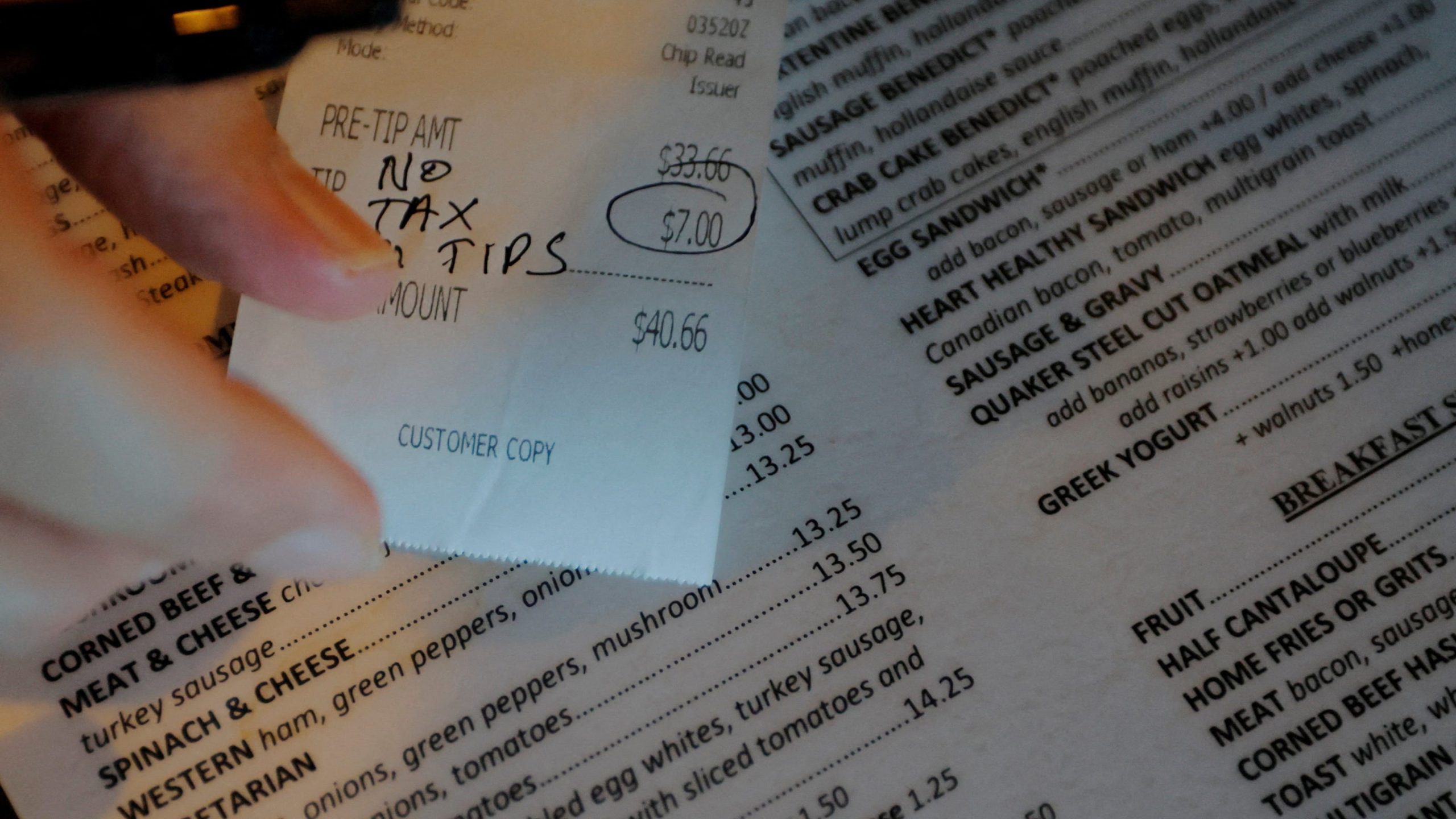
Some workers who heard “no tax on tips” throughout election season are wondering why their paychecks still look similar to those they received last year.
Miklos Ringbauer, a certified public accountant and founder of MiklosCPA Inc, said he still faces questions about how the policy works ahead of the Oct. 15 extended 2025 federal deadline.
Eligible tipped workers still waiting to file their taxes haven’t reaped the benefits of the “no tax on tips” policy yet. Whether you’re still procrastinating submitting your 2025 return or you’ve started a tipped job this year, here’s a quick refresher on how it works.

How does ‘no tax on tips’ work?
Ringbuarer said some Americans got used to receiving money from the government directly when they received stimulus checks during the COVID-19 pandemic, prompting some confusion about how to get in on “no tax on tips.”
The policy did not mandate a payroll change. It is a federal income tax deduction eligible workers can claim when they file their taxes.
Because not all tipped workers qualify for the deduction, many employers have kept their workers’ withholdings the same, Ringbauer said. This is why tipped workers’ paychecks still look similar to those they received last year.
“There are so many intricacies to it that make it impossible for your employer to make adjustments” to your paycheck, Ringbauer said.
What’s the average ‘no tax on tips’ deduction?
More than 7.5 million tax filers claimed the “no tax on tips” deduction earlier this year, receiving an average deduction of $7,000, the Treasury Department said in June. Of them, 90% reported annual income under $100,000.
Tax deductions lower filers’ amount of taxable income. They are different from tax credits, which can reduce the amount of tax they owe. Both can lead to a larger tax refund.
Erin Fabry, 41, is a part-time server at two restaurants in Tucson, Arizona, and her income mostly comes from tips. After owing the IRS $1,000 in 2025, she said she got $5,000 back this year. She added that was likely a result of changing her withholdings, but that the “no tax on tips” deduction also boosted her refund.
“Servers were jumping up and down,” after receiving their refunds earlier this year, Fabry said.
“People were like, ‘Don’t tell people. They’ll stop tipping,’” she added, but said she hasn’t noticed customers leaving smaller tips in 2026.
Tips are not completely tax free
Despite the catchy slogan, tips are still not completely tax free. Social Security and Medicare taxes still apply.
Depending on where you live, tips still may not be exempt from state and local income taxes. Tips are still being taxed in Washington, DC, and New York, for example.
Savings aren’t unlimited
Under a provision of the tax and spending law President Donald Trump signed last summer, eligible workers can deduct up to $25,000 in “qualified” tips from their taxable income.
Whether you qualify depends on how much you make. The deduction phases out for single taxpayers with a modified adjusted gross income of $150,000, and for joint filers making $300,000 or more. It is not available for married couples filing separately.
For those who are self-employed, the deduction may not exceed their net income from the trade or business in which the tips were earned, the IRS explains on its website.
Not all workers qualify
Only people working in jobs that “customarily and regularly” received tips before Dec. 31, 2024, are eligible for the tax benefit, according to the Treasury.
The department’s list of qualified occupations includes many roles. Common tipped jobs like bartenders, wait staff, maids, babysitters, and drivers make the list, but it also includes travel guides, golf caddies, gambling dealers, clowns, DJs, electricians, plumbers, tutors, photographers, and more.
Jobs that fall under “specified service trade or businesses,” or SSTBs, were originally excluded from the tax benefit. In general, they remain ineligible, but an April analysis by RSM US, an audit, tax, and consulting firm, concluded there’s likely still further guidance for SSTBs to be issued.
The Treasury’s previously outlined list of SSTBs included fields like health care as well as legal and financial services.
Not all tips qualify
Only “qualified tips” are eligible for the deduction. The IRS defines “qualified tips” as voluntary cash or charged tips received from customers or through tip sharing. Mandatory tips and automatically applied gratuity don’t count. Tips must be determined by the payor and given voluntarily.
In updated regulations, the Treasury clarified that tips received by a manager or supervisor through a tip-sharing arrangement or pool also do not count. However, if that manager or supervisor received tips directly for services they provided, those can be considered “qualified tips.”
The updated regulations also replaced a prior rule that said tips would not qualify if the recipient had an ownership interest in or was employed by the tipper. Instead, tips don’t count specifically if “based on all relevant facts and circumstances, the amount represents a recharacterization of wages or payments for goods or services for purposes of claiming the deduction,” the department said.
Tips given for illegal services, prostitution, and pornographic activity remain ineligible — an exclusion “intended to address the potential for greater noncompliance and abuse,” the Treasury added.
This isn’t permanent
The “no tax on tips” deduction expires Dec. 31, 2028, unless it is extended by Congress.
Fabry, the server, would like to see it continue. She said it helps make up for the benefits she doesn’t receive from her employers.
“Most tipped workers are not necessarily full-time where they’re getting benefits, where they’re getting paid time off,” Fabry said. “It’s very helpful for people in my situation.”
Ringbauer said employees shouldn’t get used to the deduction. He reminds his clients they may not be able to rely on it after the three-year period is over.
“This may be a good way to put some money aside, but it’s very hard when we are competing with the rise [in prices] you see at the gas station and grocery stores,” he said.
Reach Rachel Barber at rbarber@usatoday.com, follow her on X @rachelbarber_, and subscribe to her newsletter “Making More of Your Money” here.
Original source: https://www.usatoday.com/money/
Author

seoexperts1994@gmail.com
Related Posts
Environmental groups sue Trump administration over rollback of vehicle mileage rules
- 0
- 204 words
Updated on: October 2, 2026 / 4:45 PM EDT / MoneyWatch Environmental groups filed a lawsuit on Friday against the Trump administration...
Read out all
American Airlines will let travelers mix cash and miles to pay for flights
- 0
- 209 words
Updated on: October 2, 2026 / 3:20 PM EDT / CBS News American Airlines customers will soon be able to mix cash...
Read out all
Amazon vows $1 billion for data center towns, warning U.S. “can’t afford to lose” AI race
- 0
- 208 words
October 2, 2026 / 1:42 PM EDT / CBS News Amazon's cloud computing division on Friday announced a new effort to temper...
Read out all
Amazon Prime customers could get $200 refunds in expanded FTC deal. See who is eligible.
- 0
- 192 words
October 2, 2026 / 10:44 AM EDT / CBS News Amazon is issuing refunds to eligible Amazon customers under a revised $2.5...
Read out all
OpenAI parts ways with 3 researchers it says mishandled sensitive information
- 0
- 211 words
Updated on: October 1, 2026 / 2:04 PM EDT / CBS News OpenAI has parted ways with three employees who the company...
Read out all
9 in 10 Americans have encountered a cyber scam as AI fuels fraud, Consumer Reports finds
- 0
- 206 words
Updated on: October 1, 2026 / 3:50 PM EDT / MoneyWatch Digital fraud is skyrocketing due to artificial intelligence, which is boosting...
Read out all